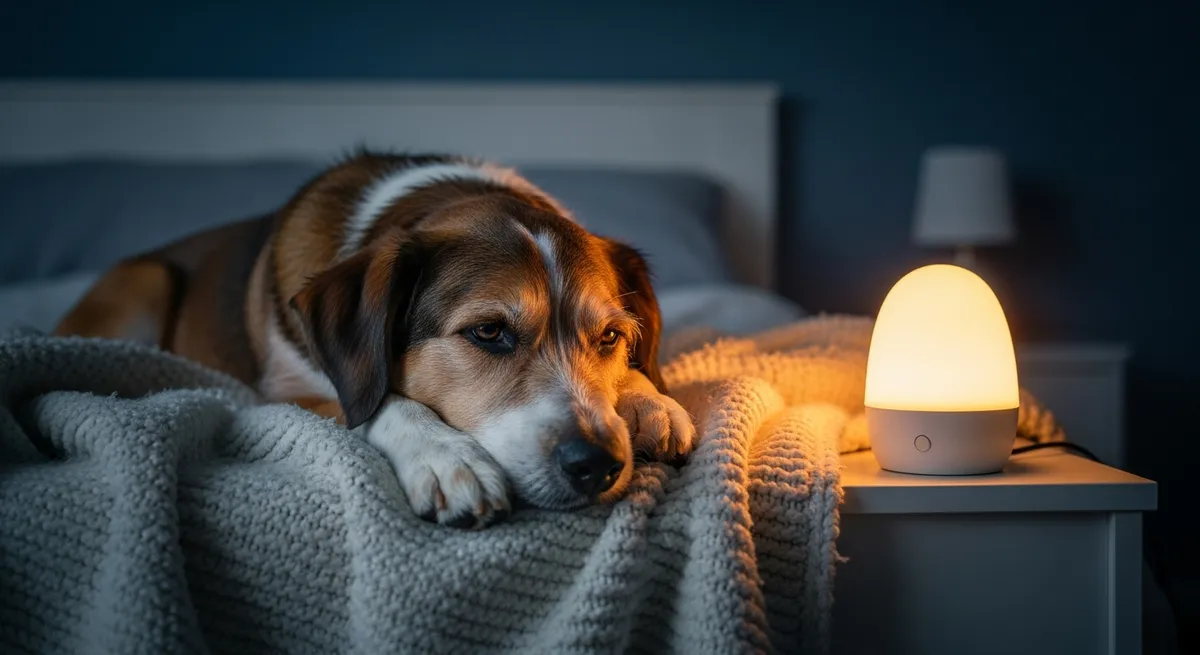
It's 2 a.m. on day three. Your new rescue dog is pacing. Or whining. Or sitting bolt upright on the bed staring at the door. You've tried the cozy crate, the calm music, the lights low, the chew toy — and yet here you are, googling "rescue dog won't sleep" with a dog watching you from across the room.
You are not failing. Your dog is not broken. The first few nights with a newly adopted dog are almost always rough — and they are rough for very specific, predictable reasons. Once you understand what's happening inside your dog's nervous system, the next few nights get easier, and within two weeks most rescues are sleeping like dogs are supposed to sleep: long, deep, and a little snore-y.
Here is what's actually going on and what to do about it.
Why Newly Adopted Dogs Don't Sleep
A shelter dog who just arrived in your home is processing a complete environmental reset. New smells, new sounds, no familiar dog or human nearby, new floor textures, a new bed, a new schedule, new lighting, and — most importantly — no idea whether this place is safe.
Their nervous system stays mildly activated, monitoring the new environment for threats. Sleep happens in short, light bursts because deep sleep would mean letting their guard down, and they don't yet know whether they can. (This is part of the broader decompression pattern explained in The First 7 Days After Adopting a Pet: What to Expect.)
The most common night-one through night-five sleep behaviors:
- Pacing or wandering the house
- Whining, crying, or barking
- Refusing to lie down or settle
- Standing alert at windows or doors
- Sleeping in short cycles, then waking suddenly
- Following you from room to room overnight
- Refusing the bed or crate you set up
- Panting that isn't related to heat
All of these are normal. None of them mean you adopted the wrong dog or that the dog will never sleep.
The Real Reasons Behind the Sleeplessness
1. Adrenaline From the Transition
A dog moving from shelter to home experiences a real physiological surge — cortisol, adrenaline, increased heart rate. Even a positive transition is a major event. That stress hormone load takes 48 to 72 hours to start dropping, and another week to settle to a new baseline.
Until then, sleep is light by design.
2. Loss of the Shelter Soundtrack
Counterintuitively, many shelter dogs sleep better in the noisy environment they came from than in your quiet bedroom. Background sounds — other dogs, staff, hallway noise — were predictable. Your home is silent until a refrigerator clicks or a neighbor closes a door, and every unfamiliar sound triggers attention.
3. Hypervigilance About You
Your new dog doesn't know yet whether you're staying. Many rescues spend the first few nights tracking your location, getting up when you get up, and checking the door when you leave the room. They aren't being needy — they're attached to the person who finally feels safe and they're confirming you're still there.
4. The Sleeping Surface Is Wrong (For Now)
Plush dog bed, raised cot, blankets, no blankets, crate, no crate — every dog has a preference, and a new arrival often hasn't figured out theirs in your home yet. Some prefer hard floors near the door for the first week. Some need to be touching you. Some won't settle until they have a corner with walls on two sides.
5. Crate Stress
If your dog wasn't crate-trained at the shelter, the first night in a closed crate can be terrifying. Even a crate-trained dog may regress in a new environment. (Crate panic is one of the most common reasons for night one whining.)
6. Bladder Anxiety
Many rescues hold their bladder all night out of stress, then suddenly need to go at 3 a.m. — or, conversely, lose control because they don't yet know how to ask. Either pattern resolves with a predictable schedule.
7. Separation Distress
If your dog is sleeping in a separate room and panicking, that's separation distress in its mildest form. It often resolves quickly with a temporary adjustment — moving the bed closer to you for the first week — but it's a real signal worth paying attention to. (For when the pattern doesn't fade, read Separation Anxiety in Rescue Pets: Signs and Solutions.)
What to Do Tonight
These adjustments help most rescue dogs sleep within the first three to seven nights:
- Set up the bed where the dog wants it, not where you wish they'd sleep. If they want to sleep on the floor next to your bed for the first week, let them. You can refine the location later.
- Use a low-volume background noise. A fan, white noise machine, or low-volume talk radio gives the dog a predictable sound layer that masks the small house noises that wake them up.
- Keep a small night light on. Total darkness is disorienting for a dog who hasn't learned the floor plan yet.
- Feed dinner at least three hours before bedtime. A digesting stomach is a restless one.
- Take a calm 15- to 20-minute walk before bed. Sniffing decompresses dogs more than running. The walk should be slow and exploratory, not a sprint.
- Skip the long play session right before bed. Excitement before sleep makes settling harder, not easier.
- Last bathroom break right before lights out. Same time every night.
- Stay close. The first week, your dog's bed in your bedroom resolves more sleep issues than any other intervention.
- Don't reward whining with attention. Wait for a quiet moment, then quietly reward the calm.
- If using a crate, leave the door open the first few nights. Let the dog enter and exit freely until they choose it as a safe place.
What Not to Do
A few well-intentioned moves consistently backfire:
- Don't punish the dog for waking up or whining. It increases anxiety and slows the trust process.
- Don't move the bed every night. Once you find the spot that works, keep it consistent.
- Don't introduce a brand-new puzzle toy or chew at 11 p.m. Save mental enrichment for daytime; bedtime is for winding down.
- Don't use sedatives or melatonin without your vet's approval. Many human sleep aids are unsafe for dogs, and even safe ones can mask a real medical issue.
- Don't expect the second night to be better than the first. It's often worse. Night three is usually the turning point.
The 3-Night and 7-Night Rule
A general timeline that holds for most rescues:
- Night 1: Hyper-alert, possibly no real sleep. The dog is processing.
- Night 2: Often the worst night. Adrenaline crash plus continued unfamiliarity.
- Night 3: First short stretches of real sleep, usually in the latest hours.
- Nights 4–7: Sleep starts consolidating into longer blocks.
- Week 2: Most rescues are sleeping through the night with one or two brief wake-ups.
- Week 3+: Normal sleep patterns are usually established.
If your dog is still pacing all night at week three, it's worth a vet check (to rule out pain or medical causes) and a conversation with a trainer.
When to Call the Vet
Most sleeplessness is decompression. A few patterns warrant a vet visit sooner:
- Panting that doesn't stop
- Refusing food and water as well as sleep
- Repeated digestive accidents
- Vocalizations that sound like distress, not just whining
- Pacing that includes circling, head pressing, or unsteady movement
- Any behavior that gets worse instead of better after the first week
These can signal pain, anxiety severe enough to need medical support, or rarely a neurological issue. None of them mean you should panic — they mean you should let your vet take a look.
Setting Up the Long-Term Sleep Routine
Once your dog is sleeping, lock in the habits that keep them sleeping:
- Consistent bedtime. Within a one-hour window every night.
- Same evening sequence. Walk, calm time, last bathroom break, lights out. The sequence becomes the cue.
- Same sleep location. Once you find what works, don't move it weekly.
- Wind-down hour. No high-energy play in the last hour before bed.
- Cool, dim, quiet (with low background noise) bedroom. Temperature matters more than people think — most dogs sleep better in a 65–70°F room.
How PawMates Pro Helps
PawMates Pro powers many of the shelters that place rescue dogs in their first homes. The platform supports the kind of intake, behavioral evaluation, and post-adoption follow-up that gives adopters honest information up front and a real support system after — including reminders to check in during the first 48 hours, two weeks, and 30 days when sleep struggles are most likely to surface. If you're an adopter struggling with the first few nights, your shelter's post-adoption team is a resource worth using; that's part of what good shelter operations are designed to provide.
The Bottom Line
Your new rescue isn't broken, and you aren't failing. The first few nights are loud, light, and often miserable for both of you because that is how a dog's nervous system reacts to a complete life change. Set up a calm environment, stay close, keep the schedule predictable, and trust the timeline. By night seven you'll see real sleep. By week three, most rescues are dreaming on their bed like they've been there forever.
Stick with it. The other side of these nights is the bond you adopted for in the first place.
Frequently Asked Questions
Why won't my newly adopted dog sleep at night?
Newly adopted dogs are typically responding to a major nervous-system reset — new smells, new sounds, no familiar reference points, and elevated cortisol. Sleep stays light and short for the first 3 to 7 nights as a protective response while the dog assesses whether the new environment is safe. This is normal and almost always temporary.
How long does it take a rescue dog to start sleeping through the night?
Most rescue dogs begin sleeping in longer stretches by night 4 to 7 and sleep through the night by the end of week two. Full normal sleep patterns are usually established by week three. Persistent sleeplessness past that point is worth discussing with your vet.
Should a new rescue dog sleep in the bedroom?
Yes, especially for the first week. Sleeping in the same room as their adopter resolves more sleep issues than any other intervention. The dog can be moved to a preferred sleep area later once trust and routine are established.
Is it okay to crate a new rescue dog at night?
It can be, if the dog is comfortable in a crate and the crate is set up calmly. Many rescues do better with the crate door left open the first few nights so they can choose to enter on their own. Forcing a frightened dog into a closed crate on night one often increases sleeplessness and stress.
What time should a dog go to bed?
Consistency matters more than the specific time. Pick a bedtime that works for your household and keep it within a one-hour window every night. The repeating sequence — walk, calm time, bathroom, lights out — becomes the cue your dog learns to settle to.
Can I give my new dog melatonin to help them sleep?
Don't give any sleep aid, including melatonin, without your vet's approval. Some are safe in proper doses, others are dangerous, and most importantly any sedative can mask a medical issue that deserves attention. Behavioral and environmental adjustments resolve the vast majority of new-arrival sleeplessness without medication.
What if my rescue is still not sleeping after two weeks?
Schedule a vet visit to rule out pain, parasites, or medical anxiety conditions. Then consult a certified trainer or behaviorist if the vet check is clear. Persistent sleeplessness past week two is uncommon and almost always has an addressable cause.
Related Articles