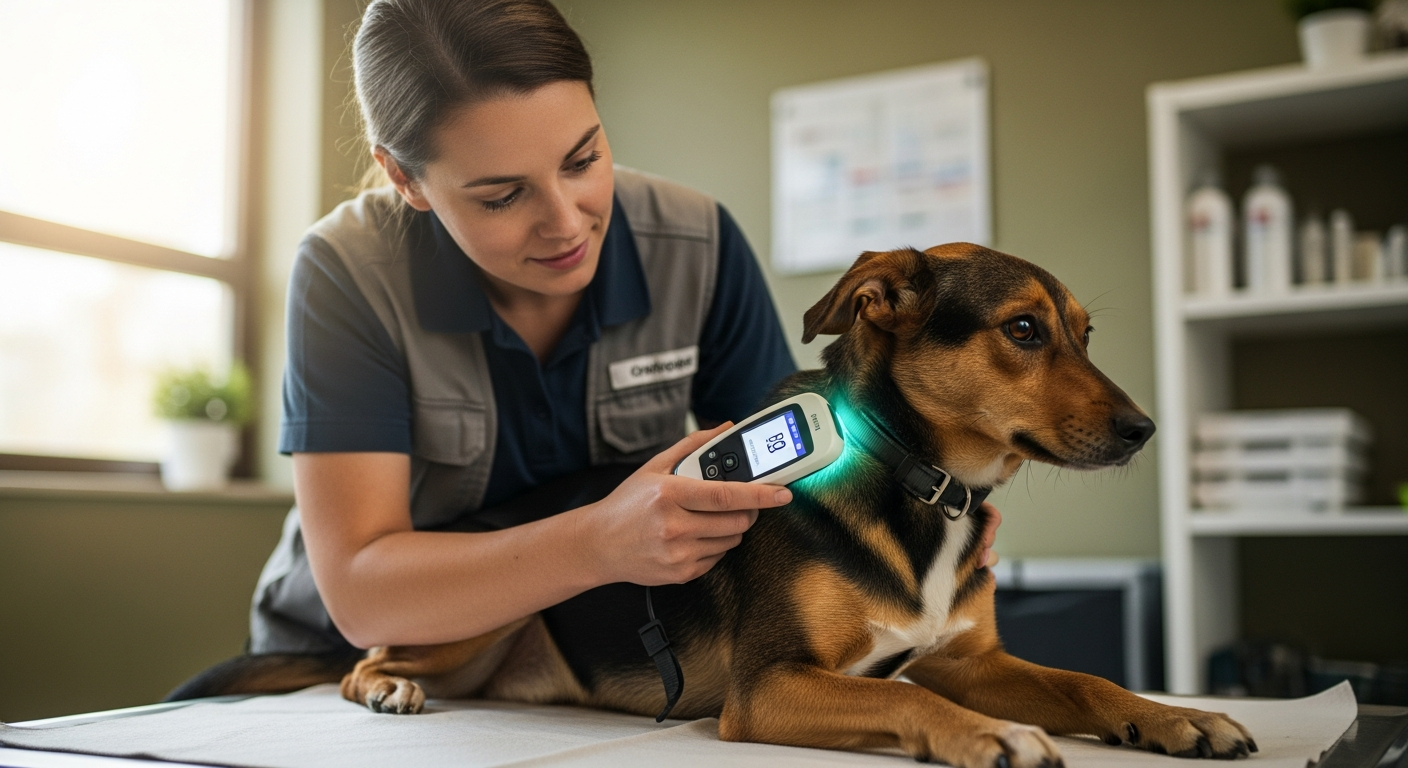
Animal welfare runs on a broken promise: that we can always tell who an animal is and who they belong to. We can't. A dog comes through intake with no collar, a worn-smooth tag, or a microchip registered to a phone number disconnected three moves ago. A cat arrives as a "stray" who is, in fact, somebody's indoor escapee two streets over. The entire downstream system — stray holds, owner reclaims, adoption, medical history, behavior notes — is built on top of identification, and identification is the layer we've never actually fixed.
This is the first post in our Reinventing Animal Welfare series, and we're starting with identification on purpose. Every other broken system we'll cover — medical records, lost-and-found, post-adoption support — depends on knowing, with confidence, which animal you are looking at.
Why is pet identification still broken in 2026?
The tools exist. The problem is that they're fragmented, optional, and disconnected from each other:
- Collars and tags fall off, fade, or go out of date. They're the fastest way home when they work, and they fail silently.
- Microchips are static numbers, not records. A chip broadcasts a 9-, 10-, or 15-digit number and nothing else. It points to a registry entry that the owner may never have updated.
- Registries don't talk to each other. A chip can be registered (or not) in any of dozens of databases. Finding the right one means running the number through the AAHA universal microchip lookup and hoping the contact info is current.
- Shelters re-key everything by hand. The same animal gets a new ID number at every shelter, every vet, every rescue — so the "record" resets each time the animal moves.
The result: identification tells you a number, not a story. And a number with no current owner attached is functionally no identification at all.
What identification should do instead
A reinvented identification layer treats the chip not as the answer but as the key — and puts a real, portable record behind it. At a modern PawMates Pro shelter, the microchip number is captured once at intake and bound to a permanent PawMates Pet ID. That Pet ID — not the chip number — becomes the stable identity the animal carries for life. The chip can be scanned by anyone; the Pet ID is what links a scan to the animal's medical history, behavior notes, shelter of origin, and current owner.
| Old identification | Reinvented identification |
|---|---|
| Chip = a bare number | Chip = a key to a living record |
| ID resets at every facility | One permanent PawMates Pet ID for life |
| Owner info is self-reported and stale | Reclaim and adoption flows keep ownership current |
| Records don't travel | Medical and behavior data follow the animal |
How a connected Pet ID changes intake day
When a stray is scanned and the chip resolves to a PawMates Pet ID, your intake team doesn't just get a phone number — they get the animal's known history. Prior shelter, vaccination status, behavioral flags, and, where the owner consented, veterinary records shared through VetPetz. A frightened dog stops being an unknown and becomes a known patient with a name. That single shift collapses days of guesswork and shortens the path to either a reclaim or a confident adoption.
For adopters, the same Pet ID is what carries the animal's story forward after they go home — which is exactly why we built the adopter-facing chip lookup hub and why owners should always transfer chip registration and verify it the day they adopt.
What shelters can do this week
- Scan every animal at intake and on every transfer, twice, with a true universal scanner — not just the brand you stock.
- Record the chip number on the animal's profile and bind it to a permanent ID, not a per-episode case number.
- Make registration transfer part of adoption finalization, not a leaflet in the folder.
- Treat "no chip" as a task, not a dead end: chip before the animal leaves your building.
Frequently asked questions
Is a microchip the same as a GPS tracker?
No. A microchip is a passive RFID tag with no battery and no location. It only does anything when a scanner is held over it. It identifies; it does not track.
Why use a PawMates Pet ID if the animal already has a chip number?
Because chip numbers reset their meaning at every facility and registry. The Pet ID is one permanent identity that links every scan to a single living record — medical, behavioral, and ownership — across shelters and vets.
What happens when a chip is registered to outdated owner info?
That's the most common failure mode in lost-pet cases. A connected reclaim flow updates ownership at the moment of adoption or reclaim, so the record stays current instead of decaying. See our deep dive on reinventing lost-and-found.
Identification is the foundation. Get it right and every other system in this series gets easier. Next up: Reinventing Animal Welfare: Medical Records.