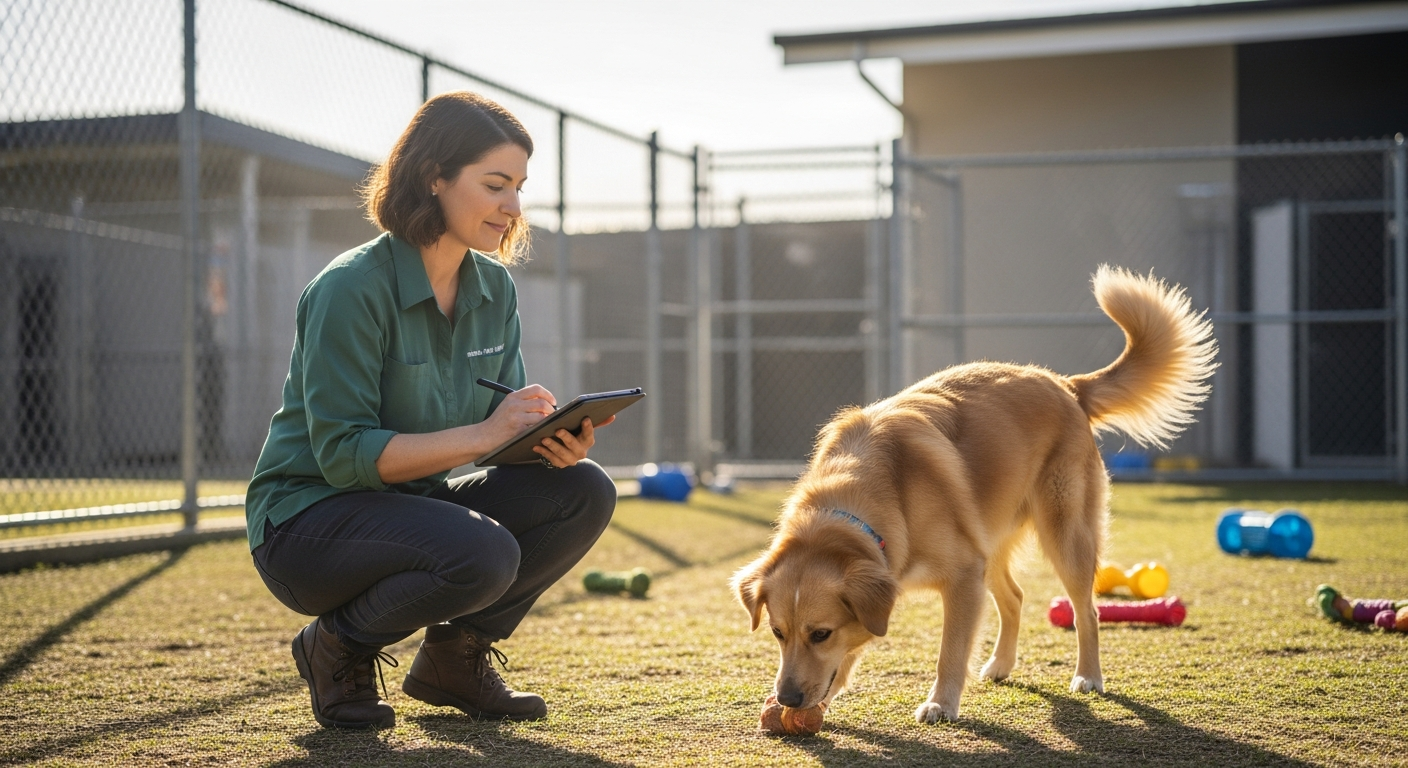
Behavior decides everything in a shelter. It determines whether an animal gets adopted, how fast, into what kind of home, and whether they come back. It's also the data we capture worst. Behavior lives as a few checkboxes on an intake form and a fading collective memory among staff and volunteers. The shy dog who blossomed in week three, the cat who only guards food when crowded, the puppy whose "reactivity" was really just under-exercise — those stories evaporate, and we make life-or-death decisions on a snapshot instead of a trend.
This post in our Reinventing Animal Welfare series is about treating behavior as longitudinal data.
Why is behavioral assessment so unreliable?
- It's a single snapshot. An intake assessment captures a terrified animal on their worst day and treats it as their personality.
- It's not recorded over time. Behavior changes — usually for the better — as an animal decompresses, but we rarely log the trend.
- It's trapped in people's heads. The volunteer who knows this dog best isn't there on adoption day, and their knowledge leaves with them.
- It doesn't travel. Behavior notes vanish at transfer and adoption, so the next handler starts from zero.
What reinvented behavioral tracking looks like
A modern approach logs behavior as a timeline tied to the animal's PawMates Pet ID. Every observation — from staff, volunteers, and especially fosters — adds to a structured record that shows trajectory, not just a moment. PawMates Pro captures these notes on the animal profile so they inform adoption matching and follow the animal forward into post-adoption support.
Structured behavior data also powers safer operations. The facility map's live compatibility checks use behavioral and species flags to warn staff before a risky kennel pairing — resource-guarding, dog-dog reactivity, isolation needs — is ever committed. Behavior stops being folklore and becomes a guardrail.
| Snapshot assessment | Reinvented tracking |
|---|---|
| One intake-day rating | A timeline of observations |
| Notes in staff memory | Structured record on the Pet ID |
| Lost at transfer/adoption | Travels with the animal |
| Decorative | Drives matching and kennel safety |
Why trajectory beats the snapshot
The most important fact about a shelter animal's behavior is usually the direction it's moving. A dog who scored poorly at a chaotic intake but has steadily relaxed over two weeks in foster is a fundamentally different adoption prospect than the intake checkbox suggests. Capturing the trend lets you market the animal honestly and match them to the right home — which is the single best defense against the returns that behavioral mismatches cause. Pairing behavior with the shared medical record gives adopters the full, truthful picture.
What shelters can do this week
- Log behavior as dated observations over time, not a one-time intake score.
- Pull foster and volunteer notes into the same structured record.
- Surface behavioral flags on kennel cards and in compatibility checks.
- Carry the behavior timeline into the adoption profile so the match is honest.
Frequently asked questions
Why is a behavior timeline better than an intake assessment?
Because animals change. Intake captures stress, not personality. A timeline shows whether an animal is improving, which is the information that actually predicts adoption success.
Who should record behavioral observations?
Everyone who interacts with the animal — staff, volunteers, and fosters. Foster observations from a real home are especially predictive of how the animal will behave after adoption.
How does behavior data prevent returns?
Honest, documented behavior lets you match an animal to a home that fits their real needs, which is the most direct way to reduce the mismatches that drive returns. See post-adoption support.