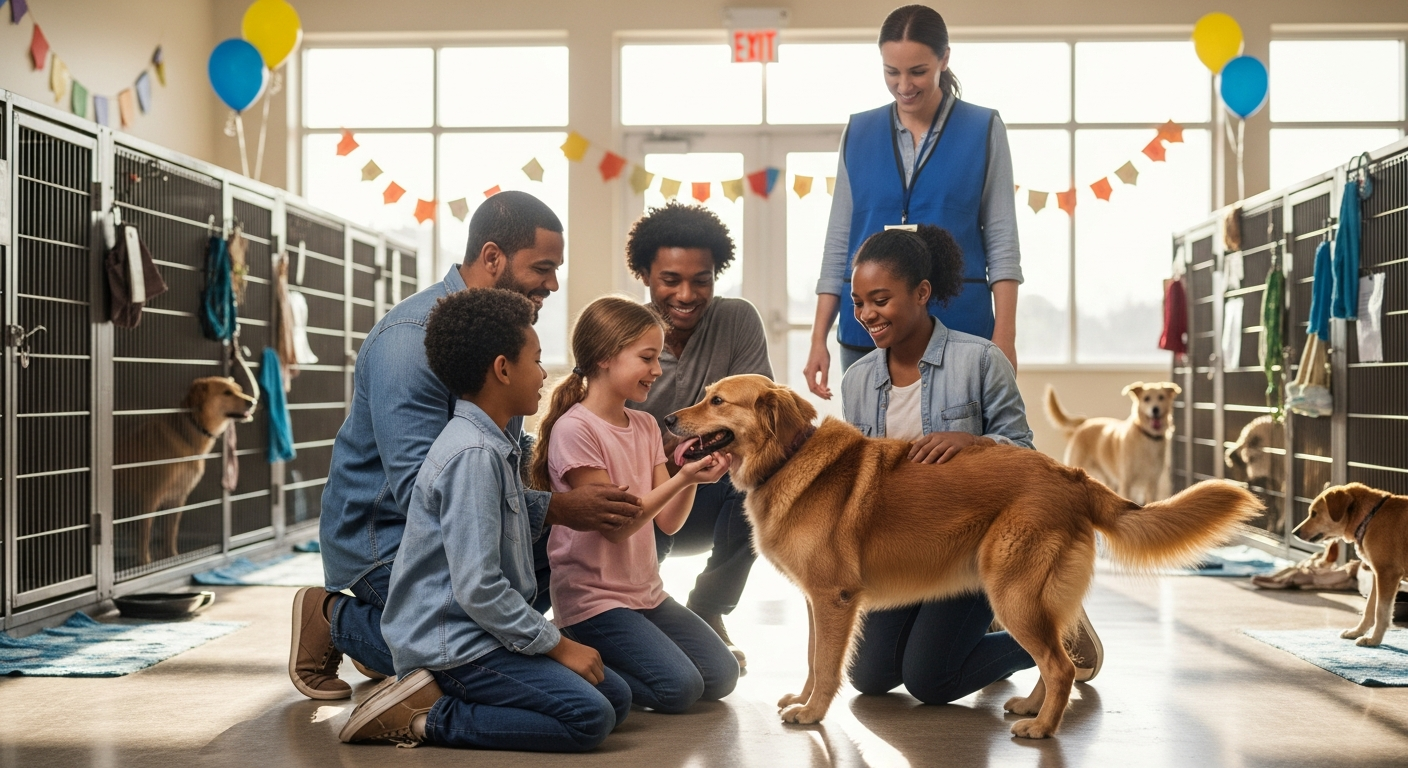
The adoption process is where animal welfare either delivers on its mission or quietly fails it. And for most of its history, the process has been built around the shelter's convenience, not the adopter's. Paper applications. Days of waiting for a callback. References checked by voicemail tag. A counselor's gut feeling standing in for a real match. Every point of friction is a point where a good adopter walks away and an animal stays in a kennel another month.
This post in our Reinventing Animal Welfare series is about rebuilding adoption from the adopter's first tap to the moment the animal goes home — and beyond, into post-adoption support.
Why do good adopters give up before they finish?
- The funnel leaks at every step. A multi-page paper form, a required in-person visit during work hours, a 72-hour wait for a decision. Each one filters out busy, qualified people.
- Matching is a guess. Counselors do heroic work, but "I think they'd be a good fit" doesn't scale and doesn't capture what the adopter actually needs.
- The animal's story is thin. One blurry kennel photo and "sweet boy, good with most" tells an adopter nothing about whether this dog fits their life.
- Decisions are opaque. Adopters who are declined rarely learn why, so they don't try again.
What modern adoption looks like
A reinvented adoption flow meets people where they are — on their phone, on their schedule — and uses what you already know about the animal to drive a real match. PawMates' swipe-based discovery was built for exactly this: adopters browse animals the way they browse everything else, and the platform surfaces the dogs and cats whose behavioral profile and needs actually fit the home.
Crucially, the animal's profile isn't a guess. It's backed by the structured medical record and behavior notes carried on the animal's PawMates Pet ID, so "good with kids" or "needs a quiet home" is a documented assessment, not a hunch.
| Legacy adoption | Reinvented adoption |
|---|---|
| Paper application, manual review | Mobile application, structured screening |
| Match by counselor instinct | Match by documented needs and behavior |
| Thin, one-photo listings | Rich profiles backed by real records |
| Decision in days | Decision in hours, with a clear reason |
Speed is welfare
Length of stay is not a vanity metric. Every extra day in a kennel raises the animal's stress, increases the risk of behavioral deterioration and illness, and occupies a space the next intake needs. A faster, clearer adoption process is one of the most direct levers a shelter has on animal welfare. PawMates Pro shelters move animals through application, review, and finalization on a single connected timeline, so nothing stalls in someone's inbox.
Don't let the relationship end at the door
A reinvented adoption doesn't end at finalization. The same system that placed the animal should keep the door open for the adopter — which is why adoption and post-adoption support are two halves of one process, and why finalization is the right moment to capture medical-record sharing consent through VetPetz.
What shelters can do this week
- Put the application on a phone and cut every field you don't actually use to decide.
- Back every listing with the animal's real medical and behavior record, not a one-line bio.
- Give declined applicants a reason and a path to try again.
- Capture post-adoption sharing consent at finalization, while the adopter is engaged.
Frequently asked questions
Does a faster adoption process mean weaker screening?
No. Structured screening is usually stronger than a paper form, because it captures the same information consistently and flags real concerns instead of relying on whoever happens to review the file.
How does better data improve matching?
When an animal's needs are documented from their medical and behavioral records, the platform can surface the homes that actually fit — fewer returns, faster placements, better outcomes.
What's the single biggest driver of length of stay?
Friction and thin information. Remove the friction, enrich the profile, and animals leave sooner. See our companion piece on shelter software.