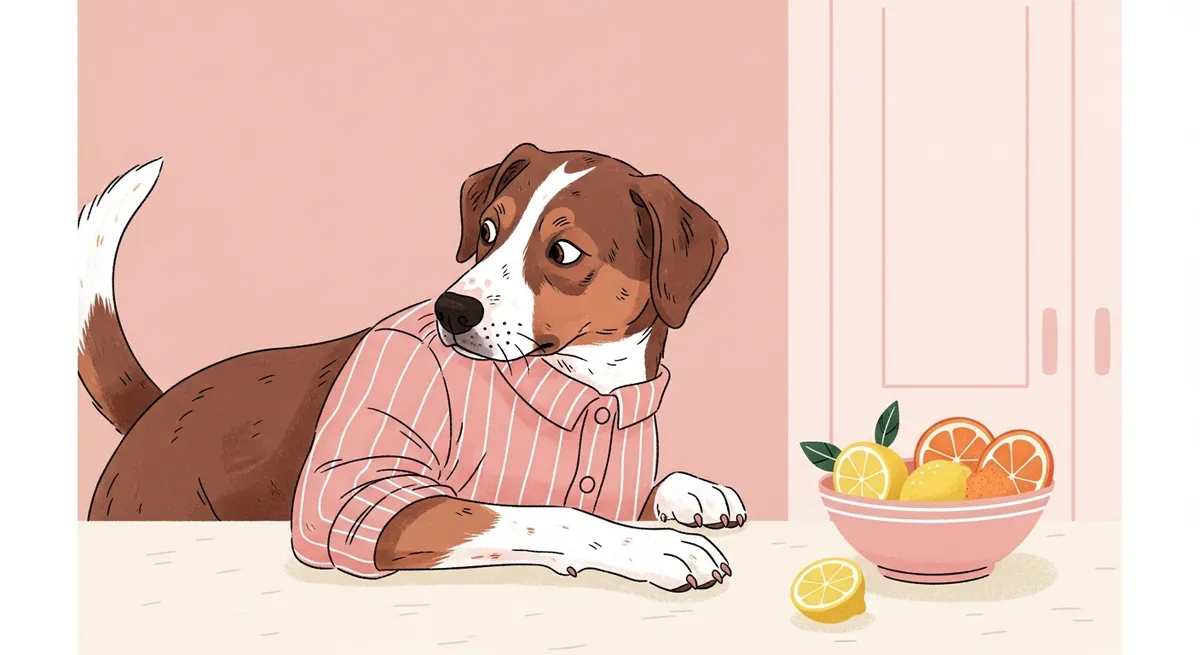
Dogs experience the world through their noses in a way humans can't really imagine. A dog's olfactory system has roughly 220 million scent receptors compared to our 5 million, and the part of their brain dedicated to processing smell is about 40 times larger than ours, proportionally. So when a smell is unpleasant to a dog, it's *very* unpleasant — closer to the way fluorescent stadium lights feel to a human with a migraine than to the mild "ugh" we'd associate with a bad odor.
Knowing which smells dogs hate is useful for two reasons: it's a humane, non-toxic way to discourage them from chewing or marking certain spots, and (just as importantly) it helps you avoid accidentally making your home miserable for a dog who can't tell you why they keep avoiding the laundry room.
The top smells dogs strongly dislike
In rough order of how strong the aversion typically is:
1. Citrus — lemon, orange, lime, grapefruit. The most reliable canine repellent. Citrus essential oils, citrus peels, and even fresh-cut citrus fruit will make most dogs leave the area. This is well-documented and used in many commercial pet deterrent sprays.
2. Vinegar — especially white and apple cider vinegar. The sharp acidity is intensely unpleasant to dogs at concentrations humans barely notice.
3. Strong spices — cayenne pepper, chili powder, black pepper, mustard. Most dogs will avoid surfaces dusted with these. (Use carefully — see the safety note below.)
4. Fresh chili peppers — same family as the spices above, with the added irritation of capsaicin if the dog noses too close.
5. Alcohol — rubbing alcohol, hand sanitizer, perfume, hair spray. Most dogs find the smell intensely off-putting and will leave the room.
6. Mothballs — and most strong chemical air fresheners. (See safety note: many of these are toxic.)
7. Strong mint — particularly menthol-heavy products and some essential oils. (Not the herb plant, which most dogs are indifferent to.)
8. Onions and garlic (raw) — most dogs avoid them by smell. (Also toxic if eaten in quantity. See safety note.)
9. Nail polish and acetone — strong solvent smells generally drive dogs out of a room.
10. Cleaning products with high chemical content — bleach, ammonia, and many commercial sprays.
A critical safety note before you do anything with this list
Several smells dogs hate are also *toxic* to dogs in non-trivial amounts: onions, garlic, mothballs, many essential oils (including tea tree, eucalyptus, and concentrated citrus oils), some cleaning products, capsaicin in concentration. "Dogs hate this smell" does not mean "this is safe to leave around your dog as a deterrent."
Safe-to-use deterrents:
- Diluted white vinegar in a spray bottle, on furniture or counter edges where you don't want chewing or jumping. Spot-test fabrics first.
- Fresh citrus peels placed on countertops or in flower beds you want to keep the dog out of. Refresh every few days.
- Commercial bitter-apple sprays. Designed and tested for safe use on chewable items; very effective for most dogs.
- A *very* lightly scented citrus or rose-water spritz in areas where the dog is doing something you want to redirect.
Avoid:
- Essential oils in any concentration around dogs, especially diffused into the air. Many are toxic.
- Onion or garlic powder anywhere a dog could eat it.
- Capsaicin sprays (the stuff inside pepper sprays) — strong enough to cause real distress and respiratory irritation.
- Mothballs anywhere the dog has any access. Acutely toxic.
Using this knowledge to actually solve common problems
- Dog chewing furniture corners or a specific shoe. A light spray of diluted vinegar on the chewable surface, plus an obvious better option (a chew toy, a stuffed Kong), redirects 80% of cases. The full chewing-fix protocol is in How to Fix Jumping, Barking, and Chewing Fast.
- Dog marking inside a specific spot in the house. First, an enzyme cleaner to remove the existing scent (regular cleaners don't break down the proteins dogs are detecting). Then a citrus-based deterrent on the spot. The smell-deterrent piece only works *after* the marking smell is fully eliminated.
- Dog getting into the trash. Move the trash, then add a vinegar-soaked cloth on top of the lid as a temporary deterrent while you train an alternative behavior.
- Dog avoiding a specific room. This is the one to take seriously. If your dog actively avoids a room, *check what's in there*. Plug-in air fresheners, scented candles, essential oil diffusers, certain cleaning products, and even some new furniture finishes can make a room genuinely intolerable for a dog without you realizing it. Remove the offending smell and watch the dog's behavior change.
The flip side: smells dogs love
For balance — dogs strongly *like* the smell of:
- Their humans (especially worn clothing). This is why your dog steals your socks.
- Other dogs they're familiar with.
- Vanilla and lavender at low concentrations (some studies show calming effects).
- Coconut.
- Most meat and fish smells, predictably.
If you want to make a space welcoming to your dog, lean toward neutral or familiar smells over strongly perfumed ones.
The deeper takeaway
The most useful version of this article isn't "what smell can I use to deter my dog from the couch" — it's "what is my dog smelling that I'm not?" Dogs spend a remarkable amount of time managing scent input that humans don't perceive at all. A dog who is restless, avoiding rooms, or behaving oddly in your home is often telling you about a smell. Take the cue. The first place to look for the cause of inexplicable dog behavior is almost always somewhere humans aren't paying attention. (More on that in What Your Pet's Body Language Is Telling You (That You're Missing).)
Related reading