Pet enrichment doesn't require a trip to the pet store or a subscription box. Some of the most effective enrichment activities use things you already have at home — a muffin tin, an old towel, a cardboard box, or a handful of kibble. The goal isn't fancy equipment. It's making your pet think, solve problems, and engage with their environment in ways that satisfy their natural instincts.
If your pet is bored and developing behavioral problems, enrichment is the fix. Here are ideas that actually work — tested by shelter staff, trainers, and experienced pet owners.
For Dogs: Food Puzzle Games
Dogs are natural foragers. Making them work for their food is one of the easiest, most impactful enrichment activities you can do.
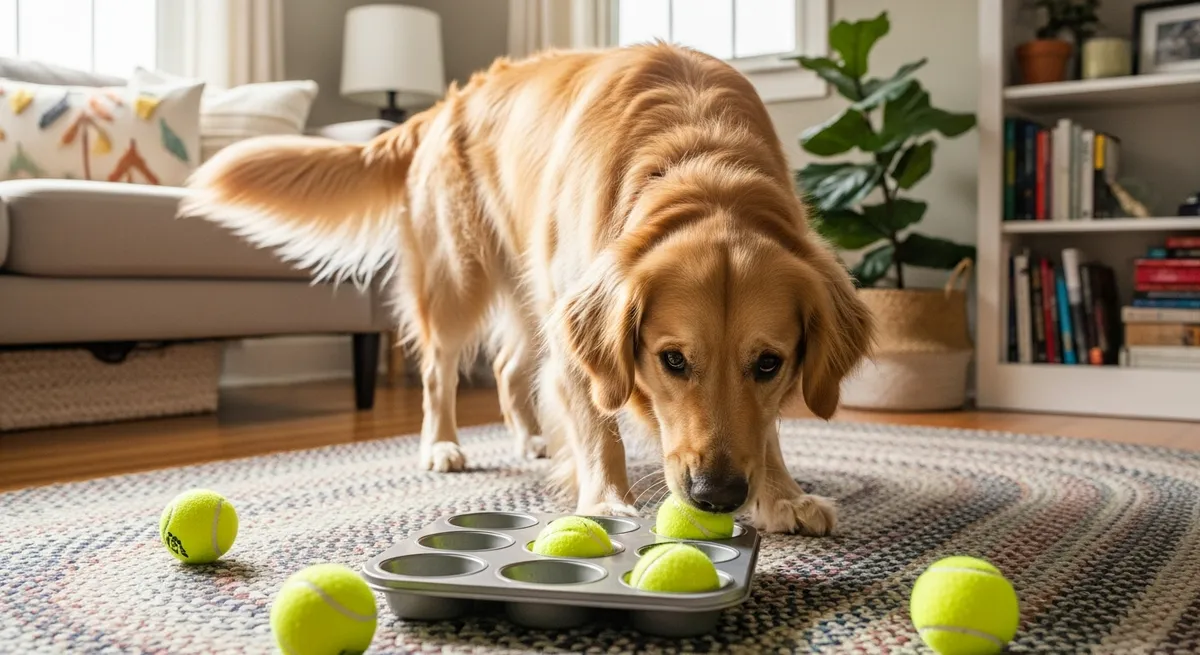
Muffin Tin Puzzle
Place kibble or small treats in the cups of a muffin tin, then cover each cup with a tennis ball. Your dog has to figure out how to remove the balls to get the food. This engages problem-solving skills and keeps most dogs busy for 10–20 minutes.
Towel Roll-Up
Lay a towel flat, scatter kibble across it, and roll it up. Your dog unrolls it with their nose and paws to find the food. Once they master the basic roll, try folding the towel into more complex shapes or tying loose knots.
Cardboard Box Dig
Fill a cardboard box with crumpled newspaper or paper towels and hide treats throughout. Your dog digs, sniffs, and forages through the box to find them. This satisfies digging instincts without sacrificing your yard.
Frozen Kong or Lick Mat
Stuff a Kong with peanut butter (xylitol-free), mashed banana, plain yogurt, or wet dog food. Freeze it overnight. A frozen Kong can keep a dog occupied for 30–45 minutes and is particularly useful when you need to leave the house. Lick mats work the same way — smear them with soft food and freeze.
Scatter Feeding
Instead of putting food in a bowl, scatter your dog's entire meal across the yard or a room. This turns a 30-second meal into a 15-minute sniffing and foraging session. It's the single simplest enrichment change you can make and it works immediately.
For Dogs: Nose Work and Sniffing Games
A dog's nose is their primary sense. Sniffing is mentally exhausting for dogs in the best possible way. Five minutes of dedicated sniffing work can tire a dog out more than a 20-minute walk.
Find It
Start simple: show your dog a treat, ask them to sit and stay (or have someone hold them), then place the treat a few feet away in plain sight. Release them with "find it!" Gradually increase difficulty by hiding treats under cups, behind furniture, and in other rooms.
Snuffle Mat
Make one from a rubber mat with holes (like a sink mat) and fleece strips tied through the holes. Hide kibble in the fleece strips. Your dog sniffs and noses through the fleece to find the food. This mimics foraging behavior and is deeply satisfying for most dogs.
Box Search
Set up several cardboard boxes in a room. Put a treat in one box. Let your dog sniff each box and reward them when they indicate the right one. This is the foundation of competitive nose work, and dogs love it.
For Dogs: Physical and Mental Challenges
Obstacle Course
Use couch cushions, chairs, broomsticks balanced on books, and blankets to create a simple indoor obstacle course. Guide your dog through with treats. This builds confidence and burns both physical and mental energy.
Training Sessions
Teaching new tricks is enrichment. Five-minute training sessions using positive reinforcement are among the best mental workouts for dogs. Teach shake, spin, touch, go to your mat, or any new cue. The learning process itself is what matters, not the trick.
Tug of War
Structured tug is excellent physical enrichment. Use a designated tug toy, teach a "drop it" cue, and play for 5–10 minutes. It builds impulse control and satisfies predatory play instincts.
For Cats: Hunting and Prey Simulation
Cats are predators. Their enrichment needs center around stalking, chasing, pouncing, and catching. Indoor cats need you to create those opportunities.
Wand Toy Play
A feather wand or string toy is the single most effective cat enrichment tool. Move it like prey — slow movements, sudden darts, hiding behind furniture, fluttering along the ground. Let your cat stalk and pounce. End each session by letting them "catch" the toy and slow the movement down so they feel a sense of completion.
Paper Bag Tunnels
Paper grocery bags (handles removed for safety) and cardboard boxes are irresistible to cats. Set up a tunnel system using bags and boxes with holes cut between them. Drag a string through the tunnel for your cat to chase. Rotate the setup every few days so it stays novel.
Puzzle Feeders
Place kibble or treats inside a toilet paper roll with the ends folded shut. Your cat bats it around, rips it open, and gets the food. Egg cartons with treats in the cups work similarly. These mimic the problem-solving required in hunting.
Window Entertainment
Set up a bird feeder outside a window where your cat can watch. This provides hours of visual stimulation. Add a comfortable perch at the window so your cat can observe without straining. Some cats will watch bird feeders for entire afternoons.
Catnip and Silver Vine
Not all cats respond to catnip, but those who do get 10–15 minutes of intense play from a sprinkle on a toy or scratcher. Silver vine affects a broader range of cats than catnip and produces a similar response.
For Cats: Environmental Enrichment
Vertical Space
Cats feel secure when they can observe from height. Cat trees, wall-mounted shelves, and the tops of bookcases all count. If you don't have a cat tree, clear the top of a bookshelf and add a soft blanket. Instant cat perch.
Scratching Variety
Provide both horizontal and vertical scratching surfaces in different materials — sisal rope, cardboard, carpet, wood. Place them near windows and sleeping areas. Scratching is a primary stress-relief and territory-marking behavior for cats.
Rotation
Cats lose interest in toys that are always available. Keep 10–15 toys and only put out 3–4 at a time. Rotate every few days. Toys that disappeared for a week become exciting again when they reappear.
For Both: Social Enrichment
Quality Time
Sometimes the best enrichment is just being present. Sitting on the floor near your cat. Lying on the couch with your dog. Calm, quiet togetherness builds trust and reduces anxiety — especially important in the early days after adoption.
Structured Socialization
If your pet is social and enjoys other animals, arranging playdates can be excellent enrichment. For dogs, find compatible walking partners. For cats, supervised interaction with a calm, friendly cat can be stimulating — though introductions must be done carefully.
A Simple Daily Enrichment Schedule
You don't need to do everything. A simple rotation keeps things fresh without overwhelming your schedule.
| Day | Dogs | Cats |
|---|---|---|
| Monday | Muffin tin puzzle | Wand toy session |
| Tuesday | Scatter feeding | Puzzle feeder |
| Wednesday | Find It game | Paper bag tunnel |
| Thursday | Frozen Kong | Window bird feeder |
| Friday | Training session (new trick) | Catnip toy rotation |
| Saturday | Outdoor sniff walk (let them lead) | Cardboard box fort |
| Sunday | Obstacle course | Laser pointer + treat follow-up |
The Bottom Line
Enrichment isn't about spending money or dedicating hours. It's about giving your pet opportunities to use their brain and body in ways that feel natural and satisfying. A dog who gets to sniff, solve, and chew is a dog who doesn't need to destroy your house to feel stimulated. A cat who gets to hunt, pounce, and climb is a cat who doesn't need to knock your water glass off the nightstand at 3 a.m.
Start with one new enrichment activity this week. See what your pet responds to. Build from there.
How PawMates Pro Helps
PawMates Pro includes energy level and enrichment recommendations on every pet profile, helping you understand what kind of stimulation your future pet will need before you bring them home. Knowing whether you're adopting a high-drive working breed or a mellow senior cat lets you prepare the right enrichment setup from day one. Better preparation means a smoother transition, fewer behavioral surprises, and a pet who feels fulfilled from the start.
Frequently Asked Questions About DIY Pet Enrichment
What is pet enrichment and why does it matter?
Pet enrichment is any activity or environmental modification that stimulates an animal's mind and body beyond basic food, water, and shelter. It includes food puzzles, nose work, interactive play, training, and environmental variety. Enrichment matters because it reduces stress, prevents boredom-driven behavioral problems, and improves overall mental and physical health in both dogs and cats.
What are the best homemade puzzle toys for dogs?
The most effective homemade puzzle toys for dogs include muffin tin puzzles (kibble in cups covered with tennis balls), towel roll-ups (kibble scattered and rolled inside a towel), cardboard box dig boxes (treats hidden in crumpled paper), and frozen Kongs stuffed with peanut butter or wet food. Scatter feeding — spreading an entire meal across a room or yard — is the simplest and most immediately effective DIY enrichment.
How do I mentally stimulate my cat without spending money?
Effective free or low-cost cat enrichment includes paper bag tunnels (handles removed for safety), cardboard boxes with holes cut between them, toilet paper roll treat puzzles (kibble sealed inside), window perches near bird activity, and rotating existing toys so they feel novel. Interactive wand toy play for 15 minutes twice daily satisfies a cat's hunting instincts and is the single most effective enrichment activity for indoor cats.
How long should I spend on pet enrichment each day?
Dogs need a minimum of 15 to 30 minutes of dedicated mental enrichment daily in addition to physical exercise. Cats need at least two 15-minute interactive play sessions per day. These don't have to be complicated — scatter feeding a dog's meal takes 30 seconds to set up but provides 15 minutes of mental stimulation.
Can enrichment replace exercise for dogs?
No. Mental enrichment supplements physical exercise but does not replace it. Dogs need both daily physical activity (walks, play, running) and mental stimulation (puzzles, training, nose work) to be well-balanced. However, mental enrichment can tire a dog out significantly faster than physical exercise alone — five minutes of nose work can be as tiring as a 20-minute walk.
What is scatter feeding and how do I do it?
Scatter feeding means spreading your pet's meal across a large area — a room, a yard, or a snuffle mat — instead of placing it in a bowl. The pet must use their nose and problem-solving skills to find every piece of food, turning a 30-second meal into a 15-minute foraging session. It is the simplest enrichment change you can make and works immediately for both dogs and cats.
Related Articles