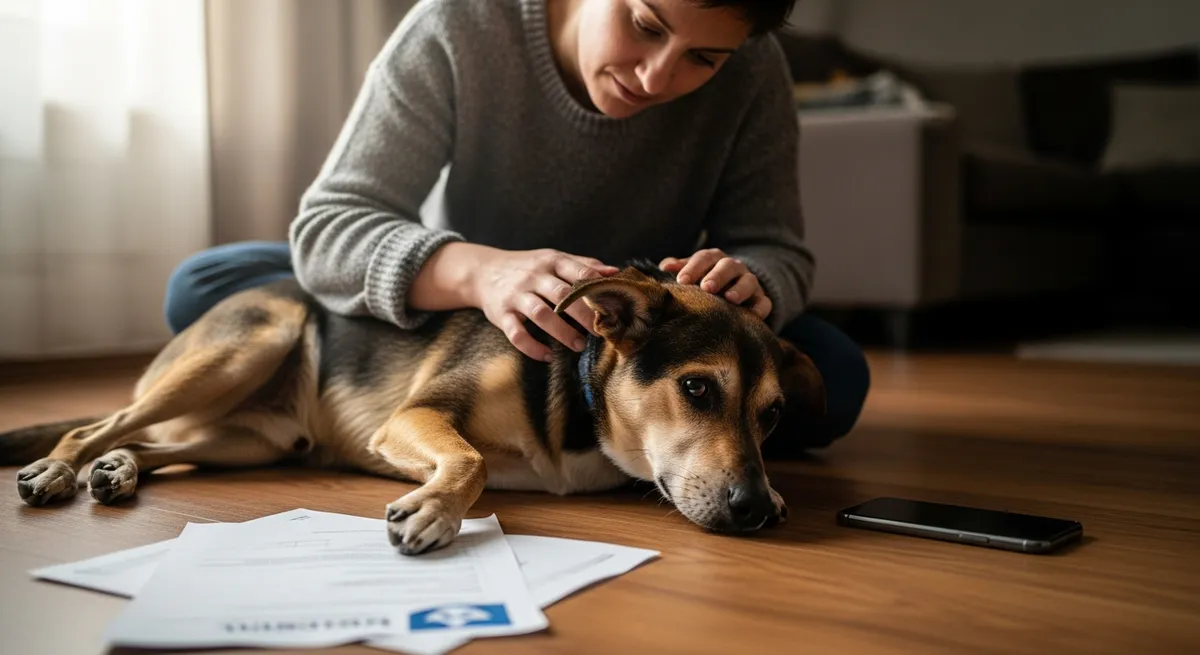
You brought home a new dog or cat full of hope, took them to your vet for the first wellness visit, and got news you weren't expecting: heartworm-positive, advanced dental disease, a chronic skin condition, a heart murmur, kidney disease, an unhealed surgical wound. Nothing in the adoption paperwork mentioned it. You feel blindsided, and you don't know whether to be angry, ask for help, or just absorb the cost.
Here's the calmer playbook. Most reputable shelters and rescues *will* work with you when something genuinely was missed — and the path to a fair outcome usually starts with a phone call, not a lawyer.
First: Figure Out Whether the Issue Was Truly Undisclosed
Before you contact the rescue, take an honest look at three things:
1. Re-read the adoption paperwork. Sometimes a condition is mentioned in the medical packet, foster notes, or contract in language that didn't register at the time — "occasional GI sensitivity," "monitoring for early dental disease," "pre-existing heart murmur grade 1, recheck recommended." If it's in writing, the rescue did disclose it, even if it didn't sink in for you.
2. Get the vet diagnosis in writing. Ask your vet for a written summary of the diagnosis, the likely onset timeline, and an estimated cost of treatment. "Likely chronic for at least 6 months" is very different from "could have developed in the past two weeks." Timeline matters — both for what was reasonably knowable at adoption and for any later legal or refund discussion.
3. Distinguish missed from genuinely unknowable. Some conditions are obvious to a vet on routine exam (severe dental disease, large masses, advanced heartworm) and should have been caught. Others can be invisible until they flare (early kidney disease, food allergies that emerge after a diet change, intermittent seizures). Both deserve a conversation with the rescue, but the framing is different.
Step One: Contact the Rescue or Shelter Directly
Reach out within the first week or two of diagnosis if possible. Email is usually better than phone for a first contact — it creates a written record and lets the organization's leadership see your message instead of a volunteer at the front desk.
A good message includes:
- The pet's name and adoption date
- The diagnosis and a brief description of the symptoms
- The vet's written timeline (and an attached PDF if you have one)
- What you're asking for: vet bill assistance, partial refund, return of the pet, or just transparency about whether they knew
- A calm, factual tone — no threats, no all-caps, no "I'll leave a 1-star review" language in the first message
Most legitimate rescues take these emails seriously. They have an interest in fixing the situation and protecting their reputation, and many have informal funds for exactly these scenarios.
What Reasonable Outcomes Look Like
Depending on the severity of the issue and what the rescue knew or could have known, fair resolutions include:
- Direct payment of the vet bill, especially for conditions clearly present at adoption (dental, heartworm, advanced parasites, untreated infections).
- Partial refund of the adoption fee, particularly when the medical condition will require ongoing costs you wouldn't have signed up for.
- Coverage at their partner clinic, where they can get the procedure done at rescue rates rather than retail.
- Return of the pet, with no judgment, if the medical needs are beyond what your household can manage.
- A formal letter acknowledging the gap, useful if you want to keep the pet but document for future reference (or for tax-deductible donation purposes if the rescue is a 501(c)(3) and offers an upgraded "medical needs" donation tier).
A reasonable rescue will pick the option that fits the situation. They won't ghost you, and they won't tell you it's now your problem because the contract is signed.
If the Rescue Is Uncooperative
Most rescues will work with you. A small number won't — and for those situations, here are your options, roughly in order:
1. Get everything in writing. Save every email, voicemail, and text. Write down the names and dates of any phone conversations. If a rescue made verbal promises before adoption ("she's totally healthy") that contradict what you now know, document that.
2. Have your vet write a formal letter. "In my professional opinion, [condition] was present and clinically apparent for at least [X months/years] prior to the adoption date of [date]." This is the single most useful piece of evidence in any later complaint.
3. Request mediation through a third party. Many rescues belong to umbrella groups or coalitions (state-level rescue networks, breed-specific councils) that can apply social pressure. A polite email to the rescue's coalition or network often reopens a stalled conversation.
4. File a consumer complaint. In the U.S., file with your state attorney general's consumer protection division and the Better Business Bureau. Some states (notably California, New York, Florida, Connecticut, Massachusetts, Minnesota, New Jersey, and Virginia) have "pet lemon laws" that explicitly cover adopted animals from rescues and shelters in some circumstances — check your state's specific statute.
5. Report to the IRS. If the rescue is a 501(c)(3) and you have evidence of fraudulent practices, you can file IRS Form 13909. This is rare and reserved for serious situations.
6. Pursue small claims court. Most U.S. states allow small claims for amounts up to $5,000–$10,000 without a lawyer. With the vet's written timeline and your documentation, you can sue for the adoption fee plus reasonable medical costs. Many adopters never have to actually file — just sending a formal demand letter signed by you (or by an attorney for $100 of their time) often resolves the matter.
7. Use the reputation lever carefully. Public reviews on Google, Yelp, and Facebook are powerful — but they should reflect the truth and be reserved for situations where the rescue genuinely refused to help, not as a first move. A factual, calm one-star review describing what happened ("Adopted [pet], diagnosed with [condition] within [time], rescue refused to discuss") will do more long-term damage to a bad rescue than a lawsuit. Most legitimate rescues will move quickly to make things right rather than risk that kind of permanent record.
The Quiet Truth About Why This Lever Works
Rescues operate on reputation. Their entire pipeline depends on adopters trusting them, fosters volunteering with them, donors funding them, and partner shelters releasing animals to them. A pattern of undisclosed medical issues, mishandled returns, or stonewalled adopters destroys all four. That's why most reputable rescues will spend $400 covering a vet bill rather than absorb a $4,000 hit to their reputation.
You don't have to threaten this. They already know it. Approaching the conversation calmly, with documentation, gives them every reason to do the right thing — and makes it much harder for them to pretend the issue isn't theirs.
What to Do If You Decide to Keep the Pet
If you've decided to keep the pet despite the medical issue (and many adopters do — especially when the bond has formed quickly), a few practical moves:
- Get pet insurance for the next pet, not this one. Pre-existing conditions are excluded by every major pet insurer, so insurance won't help with this current issue. But the experience is a strong reason to insure your next adopted pet from day one.
- Build a vet care budget. Set aside a fixed monthly amount for treatment so the cost feels managed rather than emergency.
- Ask your vet about cost-saving options. Generic medications, manufacturer assistance programs (especially for heart, kidney, and seizure medications), university teaching hospitals, and nonprofit veterinary clinics can dramatically reduce ongoing costs.
- Connect with condition-specific communities. Online groups for diabetic cats, heart-disease dogs, IBD pets, etc. are full of practical advice from owners who've been there.
- Update your records. Add the diagnosis to your pet's microchip registration, give a copy to your boarding/grooming providers, and put it on a fridge note in case of emergencies.
The Bottom Line
An undisclosed medical issue isn't the end of the world, and it's not automatically the rescue's fault — but you do have rights and you do have options. Start with a calm, documented conversation. Most reputable rescues will work with you. If they don't, you have escalation paths that range from consumer complaints to small claims to public reviews — all of which work because rescues live and die by their reputation. The pet didn't ask to be sick, and you didn't ask to be surprised. A reasonable rescue knows that and acts accordingly.
Frequently Asked Questions
How long after adoption can I still ask the rescue for help?
There's no hard rule, but the sooner the better. Within 2–4 weeks of diagnosis is ideal — beyond a few months, it gets harder to argue the condition existed at adoption (and easier for the rescue to claim it developed in your home). Some adoption contracts have specific time windows for medical disputes; check yours.
What if I already paid the vet bill before contacting the rescue?
You can still ask for reimbursement. Save the itemized invoice and receipts, share them with the rescue, and ask whether they'll cover all or part of it. Many will. Going forward, contact the rescue *before* committing to expensive treatment when possible — they may want to use their own partner vet at lower cost.
Is it worth threatening to leave a bad review?
Don't threaten it in writing — that can come across as extortion and gives the rescue grounds to refuse engagement. Just say what you need calmly. If the rescue refuses to help, leaving an honest factual review afterward is appropriate and legal. The threat is implicit; you don't need to make it explicit.
Can I sue if the adoption contract has an "as-is" clause?
"As-is" clauses are common in rescue contracts but are not absolute, especially for conditions the rescue knew about and didn't disclose. Misrepresentation, fraud, and certain consumer-protection laws can override an "as-is" clause. A consumer-protection attorney in your state can give you a 15-minute phone consultation, often free, to assess your specific situation.
What if the issue is behavioral, not medical — like undisclosed aggression?
Same playbook applies. Behavioral issues that should have been disclosed (bite history, severe separation anxiety, prey drive incompatible with stated household) follow the same path: document with a certified trainer or veterinary behaviorist's written assessment, contact the rescue calmly, escalate if necessary. See How Shelters Should Handle Bite History Disclosures at Surrender for context on how reputable organizations handle this.
Related Articles
- Should a Shelter Let Me See the Pet's Medical Records?
- How Do I Know If a Pet Rescue Is Legitimate?
- Pet Adoption Scams and Red Flags: How to Protect Yourself and Find a Legitimate Rescue
- Red Flags to Watch for When Adopting a Pet
- Why Do Rescues Require the Pet to Be Returned to Them If It Doesn't Work Out?
- Can I Afford a Pet? Expenses You Should Know About