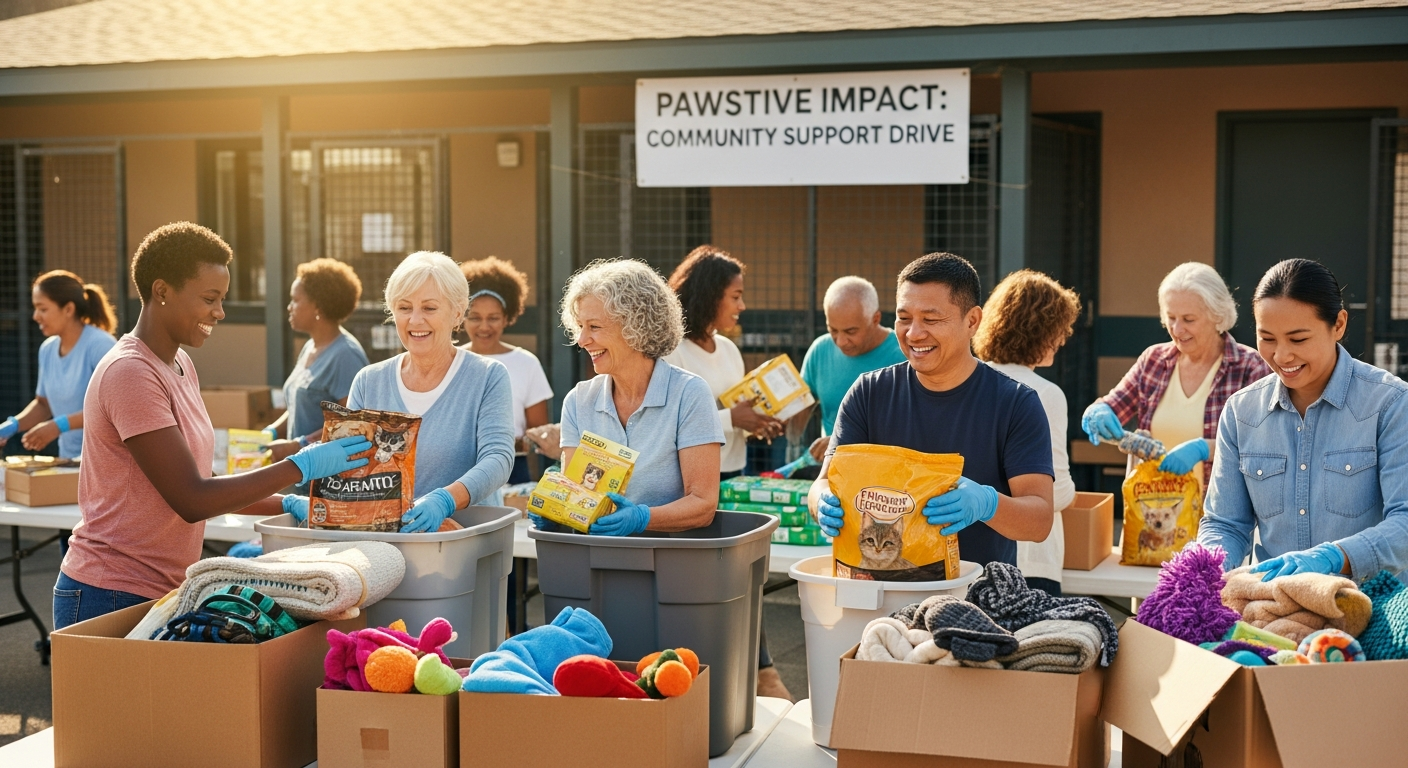
Shelters are treated as the end of the line — the place animals go when a community's safety net fails. But most surrenders aren't heartless owners; they're solvable problems. A landlord deposit. A vet bill. A behavior issue nobody knew how to address. A bag of food at the right moment. When the only tool a shelter has is intake, every problem in the community becomes a cage. The reinvention is to push support upstream, before the animal ever needs a kennel.
This post in our Reinventing Animal Welfare series is about the community systems that keep animals out of the shelter in the first place.
Why does the current model wait for crisis?
- Support is reactive. We act at surrender, which is the most expensive and least humane moment to intervene.
- Resources are invisible. Pet food banks, low-cost vet clinics, and behavior help exist, but families in crisis can't find them in time.
- Donations are friction-filled. Communities want to help, but clunky donation flows and opaque fundraising leave money on the table.
- The shelter is isolated. Volunteers, donors, fosters, and partner orgs operate in separate lanes instead of one coordinated network.
What reinvented community support looks like
A modern shelter runs a coordinated support network, not a donation button. PawMates' fundraising engine supports one-time and recurring gifts, kennel sponsorships, matching gifts, and peer-to-peer campaigns — and the Fund donation fee is 0% on both Rescue tiers and tiered modestly for shelters, so more of every dollar reaches animals. Just as important, support is wired to prevention: surrender-prevention help, foster supply drives, and adopter assistance all draw on the same community.
This connects directly to the rest of the system. Your foster program depends on community supplies and transport. Your post-adoption support keeps adopted animals from boomeranging back. And a surrender prevented is a kennel freed for the animal who truly needs it.
| Reactive model | Reinvented community support |
|---|---|
| Help starts at surrender | Help starts upstream, before crisis |
| Resources are hard to find | Coordinated, visible support network |
| One-off donation button | Recurring, sponsorship, P2P, matching |
| Shelter operates alone | Volunteers, donors, fosters connected |
Prevention is the highest-leverage welfare work
Every surrender prevented is cheaper, kinder, and faster than every adoption completed. A family that keeps their pet because someone connected them to a low-cost vet or covered a month of food is a welfare win that never shows up in your adoption numbers — but shows up everywhere in your capacity. Reinventing community support means measuring and investing in that prevented intake as seriously as you measure placements.
What shelters can do this week
- Publish your community resource list — food banks, low-cost clinics, behavior help — where families in crisis will actually find it.
- Offer a surrender-prevention conversation before accepting an owner surrender.
- Turn on recurring giving and sponsorships so support is steady, not seasonal.
- Connect your donor, volunteer, and foster networks into one coordinated community.
Frequently asked questions
Isn't preventing surrenders just turning animals away?
No. Prevention means solving the problem that's driving the surrender — food, vet care, behavior help, housing — so the animal stays in a home that wants them instead of entering the system.
How does fundraising connect to animal welfare outcomes?
Steady funding pays for the prevention work — supplies, vet vouchers, foster support — that keeps animals out of kennels. The lower the donation fee, the more of each dollar does that work.
What's the most cost-effective intervention a shelter can make?
Keeping an animal in an existing home. It's faster and cheaper than intake plus adoption, and it leaves capacity for emergencies.