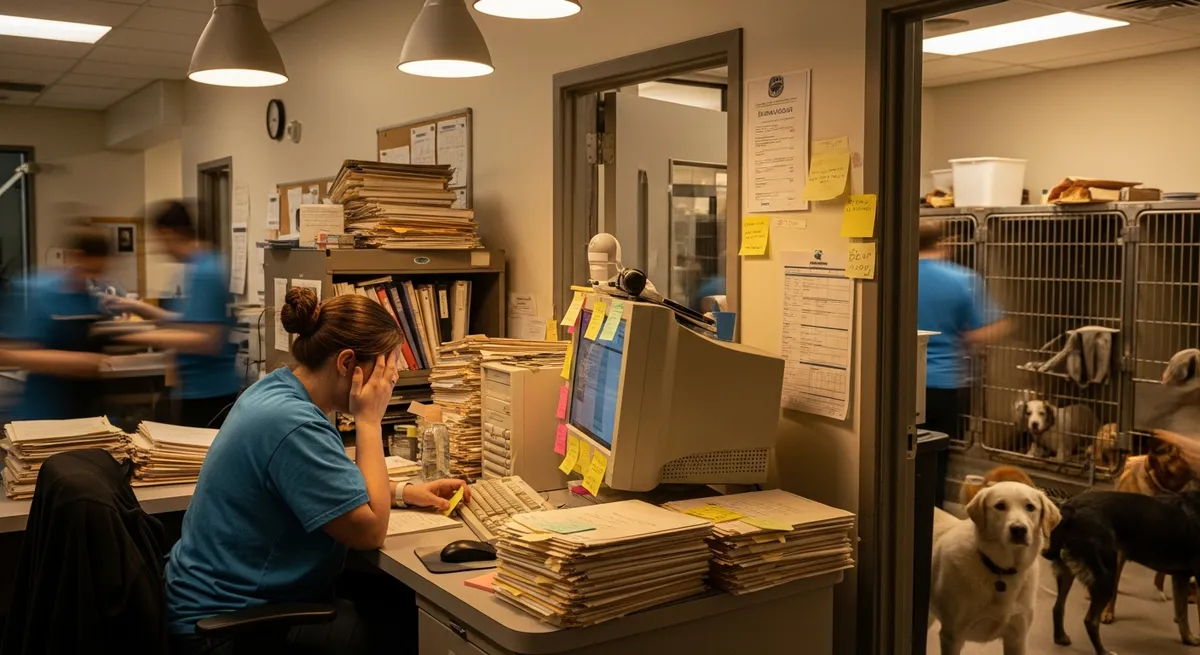
Ask ten shelter directors what the biggest problem in animal sheltering is, and you'll get answers that sound different but trace back to the same root: capacity. Specifically, more animals enter shelters every year than there are homes, foster placements, and rescue partners ready to receive them.
Everything else — long stays, behavior decline, staff burnout, euthanasia decisions — is downstream of that single fact.
The numbers, briefly
- Roughly 6 million companion animals enter U.S. shelters every year
- Approximately 4 to 5 million are adopted, returned to owners, or transferred
- The remainder either remain in care long-term or are euthanized for space, behavior, or untreatable medical reasons
- Intake outpaces adoption in most regions, especially for adult dogs, large dogs, and bonded pairs
The picture has improved dramatically over decades — euthanasia is down by more than 75% since the 1980s — but the system still operates at the edge of its capacity in most communities.
Why capacity is the root problem
Once a shelter is over capacity, every other problem multiplies:
- Length of stay rises, which means stress, illness, and behavior decline
- Disease spreads faster in crowded kennels, especially upper respiratory infections in cats and kennel cough in dogs
- Staff burn out, because they're managing trauma at unsustainable volume
- Adopters see kennel-stressed pets who don't show their real personalities, which lowers adoption rates
- Hard decisions get made faster, with less time for behavior rehab or medical care
It's a feedback loop. Crowding causes the problems that cause more crowding.
What's driving intake
Several factors converge:
- Housing instability and "no pets" policies in rentals
- Cost of veterinary care, especially emergencies
- Backyard breeding and unspayed/unneutered free-roaming animals
- Behavior issues that owners weren't prepared to manage
- Major life events — divorce, death, eviction, deployment
- Returns from previous adoptions
Notice that most of these are not the pets' fault, and most are at least partially preventable upstream of the shelter.
What actually moves the needle
Communities that have meaningfully reduced shelter intake share a few practices:
- Accessible spay/neuter — low-cost, mobile, and targeted at the neighborhoods producing the most intake
- Pet-friendly housing advocacy — working with landlords, lawmakers, and tenants to expand pet-friendly rentals
- Owner-support programs — pet food banks, behavior helplines, low-cost vet vouchers, and short-term boarding so owners in crisis don't have to surrender
- Foster networks — moving animals out of kennels and into homes, where they decompress and become more adoptable
- Transport partnerships — moving pets from over-capacity regions to regions with adopter demand
- Strong post-adoption support — keeping returns down with check-ins, training help, and a clear lifeline for adopters in trouble (we cover what good post-adoption support looks like in the 3-3-3 rule for shelter pets)
Every one of these is upstream of euthanasia, and each one has been shown to reduce shelter intake when implemented seriously.
What adopters can do
- Adopt instead of shop. Each adoption opens a kennel. Walk in armed with the right questions to ask and an understanding of what disqualifies adopters.
- Foster. Even short-term fosters dramatically expand a shelter's effective capacity.
- Spay and neuter your own pets. Unintentional litters are a leading source of intake.
- Don't surrender at the first hard month. Many shelters offer free behavior support — call before you bring the pet back.
- Donate locally. Smaller community shelters operate on margins that would astonish most people.
- Vote for and support pet-friendly housing policy. It's one of the highest-leverage interventions there is.
The biggest problem in animal shelters isn't bad pets or careless adopters. It's a community-wide capacity gap. Closing it takes shelters, adopters, fosters, vets, landlords, and lawmakers all pulling in the same direction.