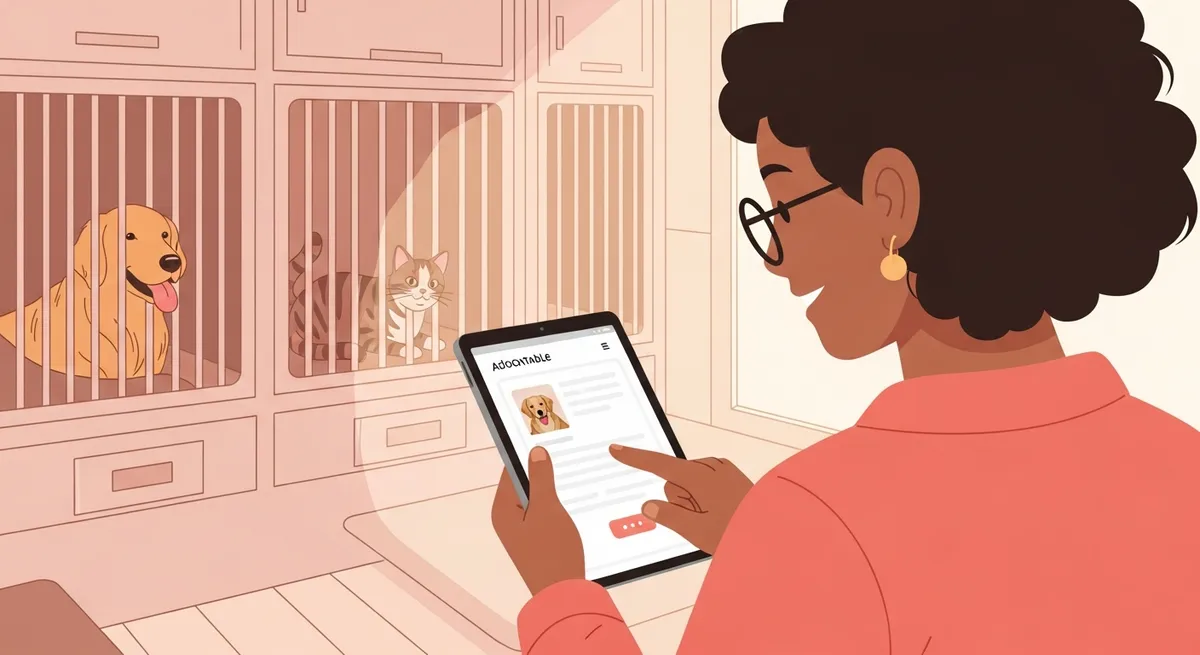
If you've ever scrolled through adoptable pets on a shelter's website, filled out an online adoption application, or received a follow-up email a few weeks after bringing your new dog or cat home, you've already used animal shelter software — even if you didn't realize it. The technology that powers modern adoptions has quietly become one of the most important factors in whether a pet finds the right home, and whether that home actually sticks.
Most adopters never think about the systems behind the scenes. But understanding how shelter software works can help you ask better questions, avoid common pitfalls, navigate the application process more confidently, and recognize when a shelter is set up to support you well — both before and after you bring a pet home.
This guide walks through what animal shelter software actually is, the features you'll bump into as an adopter, how the whole thing works, the benefits you'll feel directly, the limitations to watch out for, and where the technology is headed next.
What Is Animal Shelter Software?
Animal shelter software is the digital backbone shelters and rescues use to manage every animal in their care and every person who interacts with them. At its simplest, it's a database of pets — names, photos, ages, breeds, medical records, behavioral notes — combined with tools for managing intake, foster placements, adoption applications, volunteers, donors, and reporting.
For adopters, the part you usually see is the tip of the iceberg: the public-facing pet listings, the online application form, and maybe a confirmation email. Underneath, the same system is tracking that pet's vaccinations, kennel location, behavior evaluations, prior return history, foster notes, microchip number, and the dozens of staff and volunteer touchpoints that prepared them for adoption.
A modern shelter management platform replaces a tangle of spreadsheets, paper kennel cards, sticky notes, and disconnected websites with a single source of truth. When that source of truth is accurate, your adoption experience is smoother, the pet's profile is honest, and the shelter has more time to spend with you and the animals instead of chasing paperwork.
Common Features You'll Encounter as an Adopter
You don't need to be a shelter employee to recognize good software in action. Here are the features that most directly shape your experience:
- Searchable pet listings. A clean, filterable catalog of adoptable pets — by species, age, size, energy level, kid-friendliness, and more. The best platforms keep listings updated in real time so you don't fall in love with a pet that was adopted yesterday.
- Detailed pet profiles. Photos, video, behavioral notes, medical history summaries, foster updates, and compatibility information (good with dogs, cats, kids, etc.). The more detail you see, the better the system underneath. (See The Power of a Great Pet Description for what to look for.)
- Online adoption applications. A digital form you can complete from home, often with the ability to save and return. Modern systems route your application instantly to the right staff member instead of letting it sit in an inbox.
- Application status tracking. Some platforms let you log in and see where your application is in the process — submitted, under review, approved, scheduled for a meet-and-greet — instead of leaving you wondering for days.
- Meet-and-greet scheduling. Calendar tools that let you book a visit without a dozen back-and-forth emails.
- E-signed adoption contracts. Digital signatures so you can finalize paperwork without printing or scanning.
- Microchip and medical record handoff. A clean digital packet of vaccination records, spay/neuter status, microchip number, and medical history sent to you the day you adopt.
- Post-adoption check-ins. Automated 3-day, 3-week, and 3-month follow-ups that ask how things are going, surface issues early, and connect you to resources before small problems become return-the-pet problems.
- Adopter resource libraries. Training tips, behavior guides, vet recommendations, and crisis resources surfaced based on your pet and what you're experiencing.
If a shelter you're working with doesn't offer most of these, it's not necessarily a red flag — many smaller rescues run on volunteer time and limited budgets. But the shelters using modern platforms can usually move you through the process in days instead of weeks.
How It Works (From the Adopter's Side)
Here's a simplified walkthrough of what happens behind the curtain when you adopt:
1. Intake. A pet arrives at the shelter — surrendered by an owner, transferred from another rescue, or picked up as a stray. Staff create a profile in the software with photos, weight, estimated age, microchip status, and intake notes. (For why honest intake information matters so much, see The Do's and Don'ts of Surrendering a Pet.)
2. Medical and behavioral evaluation. Vet exams, vaccinations, spay/neuter, and behavior assessments are logged directly to the pet's record.
3. Listing publication. Once the pet is ready for adoption, the shelter publishes the profile from the same record to its website and adoption channels — without retyping into separate listing tools.
4. You apply. Your application lands in the system, gets routed to a coordinator, and may be matched against the pet's compatibility notes (do you have other dogs? a fenced yard? small kids?).
5. Review and meet-and-greet. Staff review your application and schedule a visit. Notes from your visit are added to both your file and the pet's.
6. Adoption. Contract signed digitally, fees paid, microchip transferred, medical records emailed. The pet's status flips from "available" to "adopted" instantly.
7. Post-adoption. Automated check-ins start arriving — short surveys at 3 days, 3 weeks, and 3 months. If you flag a problem, the shelter sees it immediately and can reach out before the situation escalates.
That whole loop, end to end, is what good shelter software is designed to make smooth.
Benefits You'll Actually Feel
Most adopters never see the database, the dashboards, or the cron jobs. But you absolutely feel the difference between a shelter on modern software and one stitched together with spreadsheets:
- Faster responses. Applications get reviewed in days instead of weeks because nothing falls through the cracks.
- Honest, detailed pet profiles. When the shelter has a real system tracking behavior and medical history, the profile you read matches the pet you meet. Surprises after adoption drop dramatically.
- Better matches. Compatibility data — energy level, kid-friendliness, cat-friendliness, training notes — helps staff steer you toward pets that actually fit your home, not just the ones at the front of the kennel.
- Less paperwork at pickup. Digital contracts and pre-filled forms mean you spend adoption day with your new pet instead of in front of a clipboard.
- A real safety net after you take them home. Automated check-ins make it easy to say "actually, things aren't going great" and get help before you're stuck Googling at 2 a.m. (See Common Mistakes New Pet Owners Make (and How to Avoid Them).)
- Lower return rates. When the system surfaces problems early and connects adopters to trainers, food pantries, or behavior resources, the pet stays in the home. That's good for you, good for the pet, and good for the shelter.
- Trustworthy records. Vaccination records, microchip info, and medical history come to you in one clean packet — not a stack of crumpled paper that gets lost in a drawer.
Challenges and Limitations
Shelter software isn't magic, and adopters should go in with realistic expectations:
- Not every shelter uses modern software. Many smaller rescues still run on volunteer-managed spreadsheets, free CRMs, or paper. Patience matters — these organizations are saving lives with very little.
- Data is only as good as the people entering it. A polished system can still produce a misleading pet profile if intake notes were rushed or an owner wasn't honest at surrender.
- Aggregator sync delays. A pet listed on Petfinder may have been adopted hours ago. Always confirm availability with the shelter directly before driving across town.
- Application backlogs. Even great software can't fix understaffing. During adoption surges (kitten season, holidays, post-disaster), expect longer review times.
- Privacy concerns. Modern shelter software collects a lot of adopter data. Reputable platforms protect it carefully, but it's reasonable to ask how your information is stored and shared.
- Tech can't replace conversation. The best system in the world is still a tool. The shelter staff, foster, or volunteer who actually knows the pet should be your most important source of information. Always ask questions in person or by phone.
The Future of Animal Shelter Software
The technology is evolving fast, and over the next few years adopters can expect:
- AI-powered matching. Smarter compatibility engines that go beyond "good with kids" checkboxes and use behavioral data, lifestyle questionnaires, and even photo analysis to suggest pets you'd genuinely thrive with.
- Real-time application tracking. More shelters will offer adopter apps with real-time status tracking — like tracking a package — instead of leaving adopters waiting in silence.
- Predictive return prevention. Systems that learn which post-adoption issues most commonly lead to returns and intervene proactively with training videos, food assistance, or trainer referrals before the family gives up.
- Integrated telehealth and behavior support. Adopters in the first 90 days will increasingly be able to book a virtual vet or trainer visit straight from their post-adoption check-in.
- Cross-shelter networks. Software that lets shelters across a region share pets, fosters, and adopters. If your local shelter doesn't have the right pet for you, the system can suggest one at a partner rescue 30 miles away.
- Better transparency. Public dashboards showing live capacity, recent outcomes, and intake/adoption trends so adopters can choose where to apply with full information.
In short: the tools are getting smarter, faster, and more focused on the long-term success of the adoption — not just the moment of pickup.
How PawMates Pro Helps
PawMates Pro is built around the idea that adoption doesn't end when you sign the contract — it begins there. Our platform gives shelters detailed, honest pet profiles backed by real medical and behavioral records, smart compatibility matching that surfaces the right pets for your home, and an automated post-adoption check-in system that reaches out at 3 days, 3 weeks, and 3 months to make sure things are going well. If you flag a problem, the shelter sees it instantly and can connect you with training, vet, or crisis resources before the situation gets worse. The result is faster adoptions, fewer returns, and a real safety net for the months that matter most.
The Bottom Line
Animal shelter software is the quiet infrastructure behind every modern adoption. You don't need to understand the technical details, but it's worth knowing that the speed, honesty, and follow-through of your adoption experience all trace back to the systems your shelter uses. When you find a shelter running on modern software, you'll feel the difference — clearer information, faster responses, smoother handoff, and real support after you bring your pet home. That's not a luxury. For your pet's long-term success, it's the foundation.
Frequently Asked Questions About Animal Shelter Software
What is animal shelter software in plain English?
Animal shelter software is the digital system shelters and rescues use to manage every pet in their care, every adoption application, and every interaction with adopters, fosters, volunteers, and donors. For adopters, it's what powers the pet listings you browse, the application you fill out, and the follow-up emails you receive after bringing your new pet home. Behind the scenes it tracks medical records, behavior notes, kennel locations, and outcomes — replacing the spreadsheets and paper files shelters used to rely on.
Do all shelters use animal shelter software?
No. Many large municipal shelters and well-funded rescues use modern platforms, but plenty of smaller rescues still run on spreadsheets, free CRMs, or paper kennel cards. Lack of software isn't necessarily a sign of a bad shelter — it often just reflects limited budget and volunteer capacity. But shelters using modern systems can typically move adopters through the process faster, share more accurate pet information, and offer better post-adoption support.
Why do online listings sometimes show pets that are already adopted?
Most shelters publish their pets to aggregator sites like Petfinder and Adopt-a-Pet, and there's usually a sync delay of a few hours between the shelter's internal system and those public sites. A pet may have been adopted that morning even though they're still showing online that afternoon. Always call or message the shelter to confirm availability before making a long drive.
How does shelter software actually help me as an adopter?
It speeds up application reviews, gives you more accurate pet profiles, helps staff match you with pets that fit your home, simplifies paperwork at pickup, and triggers automated check-ins after you adopt so you can flag problems early and get help. Shelters using modern software typically have lower return rates because issues get caught and resolved before they become reasons to give the pet up.
What kind of information about me does a shelter store in their software?
Typically your name, contact information, household details, application answers, any meet-and-greet notes, the adoption contract, and any post-adoption check-in responses. Reputable shelters protect this carefully and don't sell adopter data. If you want to know how your information is stored or who can see it, just ask — any well-run shelter will be happy to explain.
Will a post-adoption check-in get me in trouble if I'm honest about problems?
No. Post-adoption check-ins exist specifically so you can be honest. Saying "she's barking nonstop" or "he's not getting along with our cat" is the entire point — it triggers the shelter to reach out with training resources, behavior support, or other help. Hiding problems is what leads to returns later. Honest answers protect both you and your pet.
Can software predict whether an adoption will work out?
Not perfectly, but modern platforms are getting better at it. Compatibility matching uses information about your home, lifestyle, and existing pets and weighs it against the pet's behavioral and medical history to flag matches that look strong and ones that look risky. The final judgment still comes from experienced shelter staff and from honest conversations with you — software is a tool, not a fortune teller.
How is animal shelter software changing in the next few years?
Expect smarter AI-driven matching, real-time application status tracking like a package-tracker for your adoption, predictive return prevention that intervenes before problems escalate, integrated telehealth and trainer access from your post-adoption check-ins, cross-shelter networks that suggest pets at partner rescues, and more transparent public dashboards showing live shelter capacity and outcomes. The trend is clearly toward longer-term adopter support, not just one-shot adoptions.
Related Articles
- Common Mistakes New Pet Owners Make (and How to Avoid Them)
- The Power of a Great Pet Description
- The Do's and Don'ts of Surrendering a Pet: Why Honesty Saves Lives
- Pet Adoption Scams and Red Flags: How to Protect Yourself and Find a Legitimate Rescue
- The First 7 Days After Adopting a Pet: What to Expect