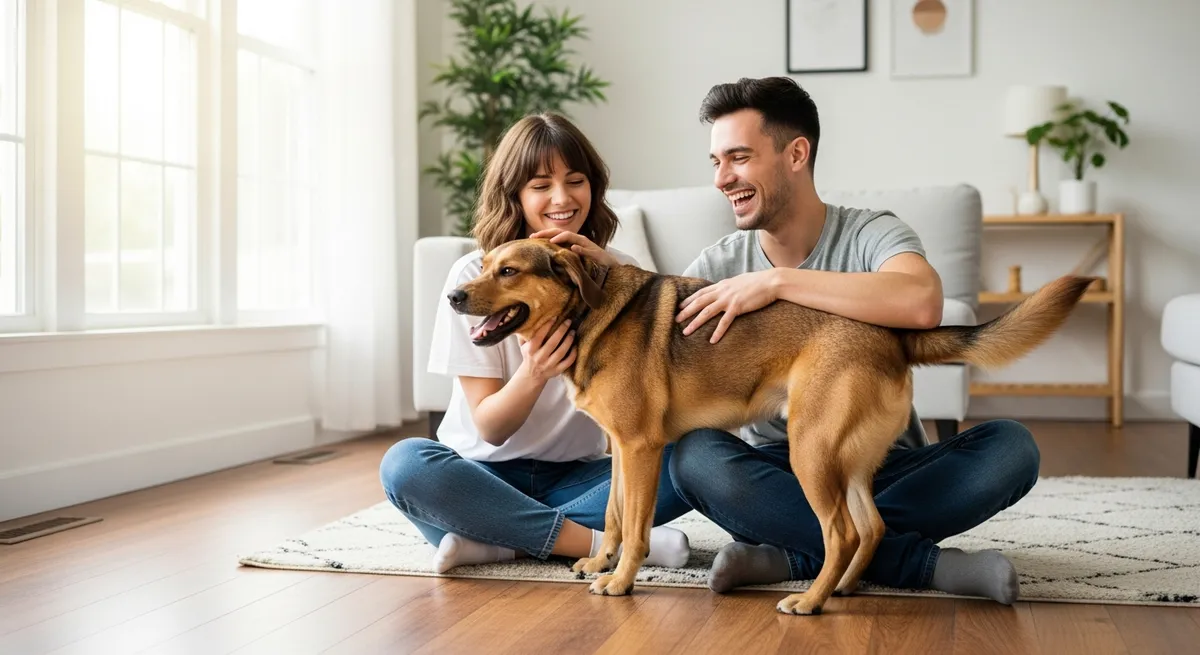
Picking the right breed for your first dog matters more than almost any other decision you'll make as a new owner. The wrong choice — a working breed with no job, a high-prey-drive terrier in a small apartment, a brachycephalic dog with a $10,000-lifetime medical tab — turns the joy of a first dog into a year of crisis. The right choice makes everything easier.
Here's an honest, breed-by-breed look at the best dog breeds for first-time owners, plus the specific traits to actually filter on if you're adopting a mixed-breed dog from a shelter (which most first-time owners should).
The honest filter: what makes a dog "easy" for beginners
Before the breed list, the actual criteria that matter:
- Moderate energy level. Working breeds need a job. Beginners don't have a job to give them.
- Eager-to-please temperament. Independent breeds (hounds, primitive breeds, livestock guardians) make training harder than it needs to be.
- Forgiving of handler errors. Some breeds are sensitive enough that a single mishandled correction creates lasting fear. Beginners will make mistakes — pick a breed that bounces back.
- Reasonable adult size. Giant breeds are harder to manage and carry shorter lifespans plus higher medical costs.
- Tolerable grooming demands. A doodle in your first year is roughly a part-time job in coat maintenance.
- Few breed-specific health issues. Brachycephalic breeds (bulldogs, pugs, French bulldogs) come with high lifetime vet costs. See is it cheaper to get a dog from a shelter for the math.
Top 10 best dog breeds for first-time dog owners
1. Labrador Retriever (and Lab mixes)
The most-recommended first-time breed for good reason: eager to please, forgiving, social, biddable, and generally healthy. Energy is moderate-to-high; expect daily exercise. Almost every shelter has Lab mixes.
2. Golden Retriever (and Golden mixes)
Same temperament profile as Labs with slightly more grooming. Sensitive enough that they don't tolerate harsh handling — which makes positive-reinforcement training easy. Higher cancer rates in purebreds; Golden mixes from shelters often have hybrid vigor.
3. Cavalier King Charles Spaniel mixes
The pure version has heart and neurological issues; mixed-breed Cavaliers (often shelter "Cavachons" or Cavalier mixes) keep the affectionate, low-energy temperament without the worst medical baggage.
4. Bichon Frise
Small, cheerful, low-shedding, social. Needs grooming every 6–8 weeks. Generally healthy. A great apartment dog.
5. Beagle
Friendly, sturdy, kid-tolerant, and famously food-motivated, which makes training easier. Two real caveats: they're vocal (the breed howl), and they're scent hounds, so off-leash recall takes serious work.
6. Cocker Spaniel
Affectionate and softer-tempered. Grooming is real (every 6 weeks). Avoid lines with documented temperament instability; ask the shelter for a behavioral evaluation.
7. Boxer (and Boxer mixes)
Playful, family-oriented, and far easier than their imposing appearance suggests. Mid-to-high energy through age 5. Many shelter "pit mixes" are actually boxer mixes — a benefit, not a strike. (See why pit bulls get a bad rap for the visual-mislabeling problem.)
8. Standard Poodle (and Poodle mixes)
Highly trainable, low-shedding, social. Standard Poodles are easier first-time dogs than Toy or Miniature Poodles, which can be sharper. Real grooming costs.
9. Greyhound (retired racer)
Quiet, gentle, low-exercise indoor couch potatoes. Many local rescues specialize in placing retired racers. Excellent for low-activity homes and apartments. Need leashing always — sight hounds with prey drive.
10. Mixed-breed adult shelter dog with a good behavioral evaluation
This is genuinely the answer for most first-time owners. An adult dog whose temperament is already visible, evaluated by shelter staff, beats a puppy of any breed for predictability. Shelters using PawMates Pro document the behavioral evaluation in the pet's profile so adopters can see what the staff actually observed.
Breeds first-time owners should usually skip
These aren't bad dogs — they're bad first dogs:
- Border Collie, Australian Shepherd, working-line German Shepherd, Belgian Malinois. Working drives that require hours of structured work daily. Without a job, they invent destructive ones.
- Husky, Malamute, Akita. Independent thinkers; recall is hard; many vocal, prey-driven, and same-sex aggressive.
- Jack Russell Terrier, Patterdale, working-line terriers. High prey drive, high energy, can be reactive.
- Chow Chow, Shar-Pei, Akita. Independent, aloof temperaments and often more reserved than first-timers expect.
- Dogo Argentino, Cane Corso, Presa Canario, Boerboel. Powerful guardian breeds that need experienced handling and serious socialization from puppyhood.
- French Bulldog, English Bulldog, Pug. Sweet temperaments, severe brachycephalic health issues, very high lifetime vet costs.
- Doodles bred by non-reputable breeders. Coat is far more demanding than people expect; behavior varies wildly because doodling-for-money breeders don't temperament-test.
Adopting from a shelter as a first-time owner
Skip the breed obsession and use these filters instead:
1. Adult, not puppy. Adult dogs are easier; their personality is already there.
2. Foster-evaluated when possible. A dog who lived in a home for 2–4 weeks before you meet them has real data behind their description.
3. Behaviorally evaluated — read the shelter's actual notes, not just the breed guess. Look for "kid-tested," "cat-tested," "dog-tested" markers.
4. Medium energy and biddable — the dog who chooses to check in with you during your meet-and-greet is the dog who will train easily at home.
5. Right size for your housing — small to medium for apartments; medium for first-time house dogs.
6. Foster-to-adopt arrangement — many shelters and rescues offer a 1–2 week trial. Take it.
PawMates Pro shelters often use the platform's compatibility matching to surface dogs whose evaluated temperament fits your lifestyle, so you're not relying on the breed label alone.
Frequently asked questions
Should I get a puppy or an adult as a first dog?
Adult. Puppies are charming but require months of housebreaking, crate training, and 24/7 supervision. An adult dog gives you a known temperament from day one.
What's the best first dog for a family with kids?
Adult Lab or Lab mix, Golden or Golden mix, or a behaviorally evaluated medium-size mixed breed. Avoid puppies — too much risk of accidental rough handling injuries either way.
What's the best first dog for an apartment?
Greyhound, Cavalier mix, Bichon, retired racing dog, or a medium-energy senior. Energy level matters more than size.
Are doodles good first dogs?
Sometimes, but their grooming demands surprise most first-time owners. Budget $1,200+/year in grooming and pick a breeder (or rescue) that temperament-tests.
What about getting two dogs at once?
Hard pass for first-time owners. Train one first.
Bottom line
The best dog for a first-time owner is an adult, medium-energy, behaviorally evaluated shelter dog with a forgiving temperament — Lab mix, Golden mix, retired racer, or a known-quantity mixed breed. Skip the working breeds, the brachycephalic dogs, and the high-drive terriers until you have a few years of experience.
Related reading
- Is it cheaper to get a dog from a shelter? — why shelter adults beat breeder puppies for first-time owners.
- Why do pitbulls get a bad rap? — and why looking past the label opens up the best easy adult dogs.
- Can I get my dog to like cats? — if you already have a cat, breed and evaluation matter.
More on the PawMates adopter blog.