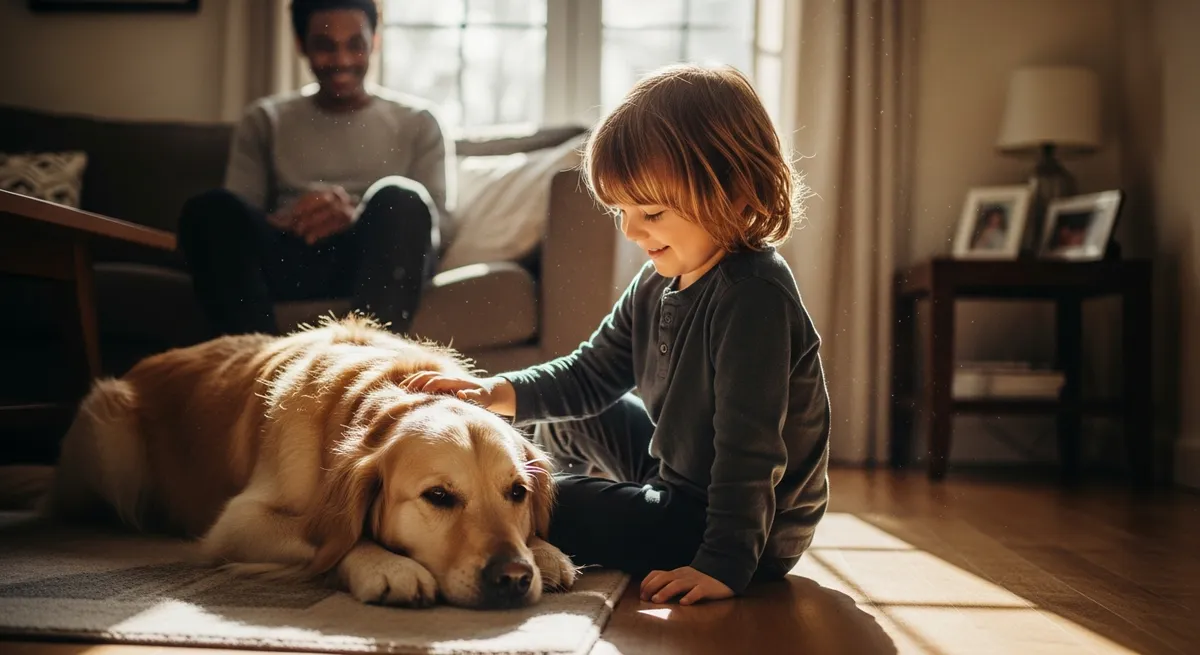
Bringing a pet into a home with kids is one of the most rewarding things a family can do — and one of the most predictable causes of returns when the kid-pet relationship isn't taught from day one. Animals don't bite "out of nowhere." They bite after a chain of warning signals that an unprepared child missed. The good news: respect is teachable, and most kids pick it up faster than adults expect.
Here's how to set the foundation in the first weeks at home.
Start with the body language vocabulary
Before the pet arrives — or in the first week — sit down with your kids and teach them what the animal's body is saying. Use real photos and short videos. Most children can name human emotions on a face by age four; they can learn the same skill on dogs and cats by five or six.
For dogs, teach the four signals every kid should know on sight:
- A loose, wiggly body with a soft mouth — happy and inviting interaction.
- A still body with a closed mouth, eyes wide showing the whites ("whale eye") — uncomfortable, needs space.
- Lip lick when no food is around, or a yawn when not tired — early stress signal.
- A stiff body, head low, ears forward or pinned back, growl or hard stare — serious warning to back off.
For cats:
- Slow blink and a soft tail wrap — relaxed, content.
- Ears swiveled sideways or back, tail twitching at the tip — done with the interaction.
- Crouched, ears flat, dilated pupils — frightened or about to swat.
Make a game of it: scroll through pet photos at dinner and ask each kid to call the signal. Within a week, most children get it right almost every time.
Teach the "three-second rule"
The single best rule for young kids is this: pet for three seconds, then stop. If the animal leans in, ask for more, or stays close, pet for three more seconds. If the animal walks away, the answer is no — and the kid honors it without chasing. This single habit prevents the majority of avoidable scratches and snaps. Adults need it too.
Set the no-go zones
Every animal needs a place where the kids do not go. Pick one — a crate, a bed, a sun spot — and make it absolutely off-limits. The pet learns the spot is safe; the kid learns that respect means letting the animal opt out. Tape on the floor or a small sign helps with younger kids. Reinforce it daily for the first month.
Same rule for food bowls and chew toys. Even pets without resource guarding deserve to eat in peace. A pet who learns the kids will leave them alone during meals will never feel they have to defend the bowl.
Model the right tone
Children mirror adult voices and adult hands. If you reach in fast, grab collars, or yell "no" at the dog when the dog is doing something annoying, your kids will too — and they'll do it harder. The way you treat the animal in front of your child is the rulebook your child will follow when you're not in the room.
A useful self-check: would I do this to a coworker? Yelling, grabbing, startling, waking from sleep — those are not interactions a kid should learn from you, regardless of the pet's tolerance.
Supervise every interaction in the first 90 days
In the first three months, treat every kid-pet interaction the way you'd treat a kid in a swimming pool: full adult eyes on it. The 3-3-3 rule for shelter pets — three days to decompress, three weeks to settle in, three months to feel at home — applies just as much to the kid-pet bond as it does to the pet alone. The honeymoon is also the highest-risk period because everyone is still reading each other.
If you cannot actively supervise, the pet and the kid go in separate rooms or behind a baby gate. This is not a sign of distrust; it's how lifelong relationships start. Many shelters that use modern adoption software (including PawMates Pro shelters) require all household members — kids included — to attend the meet-and-greet for exactly this reason: the pet who clicked with everyone in the room is the pet who comes home and stays. If your shelter offered a meet-and-greet that excluded the kids, that's a step worth asking to redo.
Teach kids the three things they will *do*, not just what to avoid
Most pet-safety lessons for kids are a long list of "don'ts." Replace them with three positive jobs:
1. Be a tree when an unfamiliar dog approaches — feet planted, hands folded in front, eyes down. Boring kids are safer kids.
2. Use a flat hand for treats, palm up, fingers together. Pinched fingers are easy to miss.
3. Tell an adult the moment the animal does something new — growl, hide, refuse food, change in poop. Kids who feel like reporters, not tattlers, catch problems early.
The lifelong payoff
A child who learns to read an animal grows into an adult who reads people better. Studies on empathy development consistently link early caregiving for animals with stronger emotional intelligence in adolescence. The pet you bring home now isn't just a pet; they're a daily teacher of attention, patience, and respect.
For the parent side of the equation, see our breakdown of the seven basic needs of animals — meeting them yourself is the best way to model the behavior your kids will copy. And if you're still in the deciding phase, questions you should ask before adopting is the right next read.