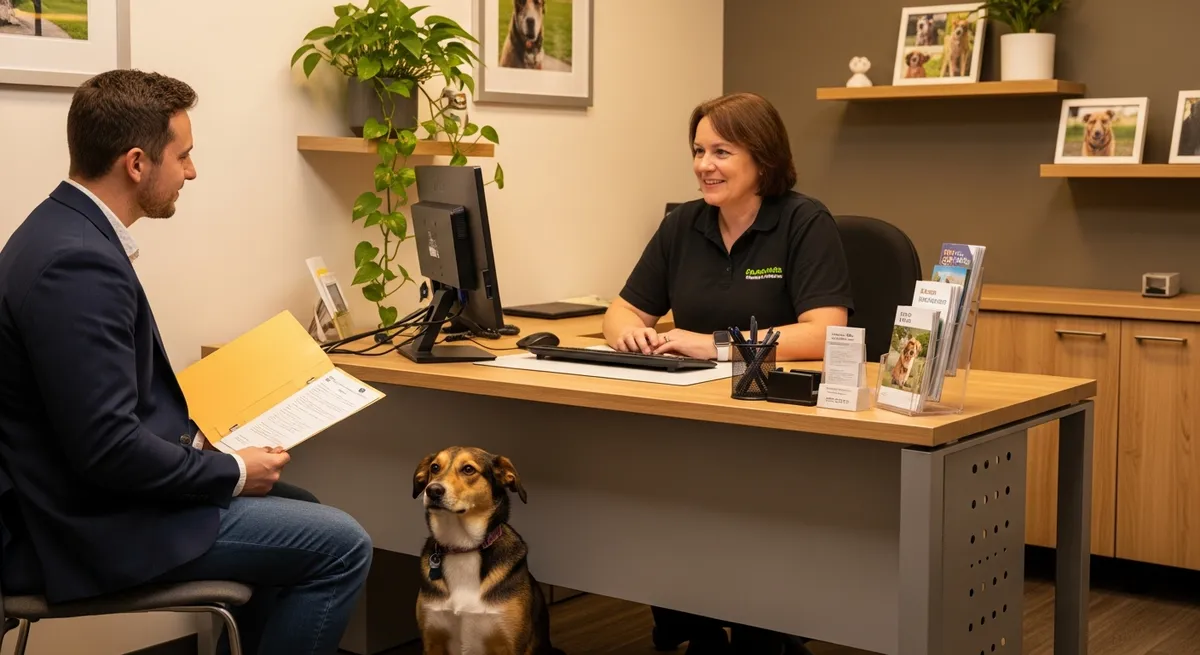
Most adopters look the same on paper. The applications all check the right boxes. The vet references all return positive. The yard photos all look fine. From the shelter staff's side of the desk, the question isn't "is this person disqualified?" — it's "out of three solid applicants, who is the one most likely to still have this pet in five years?" The applicants who get picked are the ones who do a few specific things that quietly signal they are serious.
Here's how to be one of them, without padding your application or pretending to be someone you're not.
Lead with specificity, not enthusiasm
Every application includes the line "I have always loved animals." Every applicant means it. None of it differentiates you. What differentiates you is specificity: details that prove you've thought past the feeling.
Compare:
- Generic: "I have a fenced yard and the dog will get plenty of exercise."
- Specific: "We have a 6-foot privacy-fenced yard, but I plan on two off-leash sessions per week at [name of local fenced dog park] and one 45-minute morning walk on weekdays before work."
Same applicant, dramatically different signal. The specific version says: I have already pictured the calendar.
Apply the rule to every section. "Plan to crate-train" → "I have an XL wire crate set up in the office, blanket draped over it, with a Kong I'll be stuffing the night before." "Will work on training" → "I've booked an intake consult with [trainer name or shelter-recommended class] for the second Saturday after pickup."
You don't need to be perfect. You need to be precise.
Match yourself to the pet, in writing
The shelter is scoring compatibility. Many modern shelters — including those running PawMates Pro — produce a deterministic compatibility score (0–100%) on every application that weighs yard match, energy level, prior pet experience, kid/dog/cat compatibility, and time-alone tolerance against the specific animal's known behavior. The application that says, in your own words, "Here's why this dog and my home fit each other" is doing for the staffer what the algorithm already does — and is much more memorable.
Try a paragraph like this:
> "I'm interested in [Pet Name] specifically because their bio describes them as low-to-medium energy, good with adult-only households, and needing a slow social ramp. My household is two adults working hybrid (one home four days a week), no kids, no other pets, and we want a calm companion rather than an active hiking dog. The bio mentions noise sensitivity; our apartment is on the quieter side of the building, away from the elevator."
This paragraph does three things: it proves you read the bio carefully, it shows you understand what the pet needs, and it gives the staffer a clean answer to the question "should I send this one to the meet-and-greet stage?" If the bio mentions that the pet has been returned before or has a specific challenge, name it. Adopters who flinch from hard topics in the application are the ones who flinch from them at home.
Bring everyone to the meet-and-greet — actually everyone
This is the single biggest thing that separates a "we'll think about it" from a "let's start the paperwork." Bring every household member: spouse, kids old enough to behave, the resident dog (with shelter permission and a careful protocol), and ideally any caregiver who'll spend significant time with the pet.
Most shelters running modern intake software *require* the names and ages of household members before an application can advance, and many require the meet-and-greet to include them. The applications that quietly skip the spouse or "leave the kids at home, they'll be fine with whatever we pick" are the applications that produce the most week-six returns. Adopters who bring everybody — and who let the pet meet the household before the household commits — are the ones who finish the year still in love with the placement.
Have the paperwork done before you walk in
Slow applications are not failed applications, but they are forgettable ones. Adopters who do the boring work in advance get noticed:
- Photo ID with current address (not the old address you keep meaning to update).
- Proof of residence — a recent utility bill or lease.
- Landlord contact info if you rent, AND a pre-secured written confirmation that pets of the relevant size and species are allowed. Calling the landlord *before* you apply, not during the shelter's review window, can shave days off the timeline.
- Vet references if you've had pets before — call the vet first and tell them a shelter may reach out, so they prioritize the callback.
- Two non-family personal references with current phone numbers, ideally pre-warned that they may get a call.
The applicant who has all of this assembled before the first conversation gets through the process visibly faster. Faster doesn't just mean convenient — it signals organization, follow-through, and seriousness.
(For the full rundown, see how to prepare for an animal shelter interview.)
Show, don't tell, on financial readiness
"I can afford a pet" is not a useful sentence in an application. What's useful:
- A line about your planned annual budget for routine vet care (a realistic figure for most areas is $700–$1,200 per year for a healthy adult dog or cat, more for seniors or chronic conditions).
- A specific plan for unexpected vet costs — a small dedicated savings line, pet insurance, or a credit cushion. "I have $1,500 set aside in a pet emergency fund" is far stronger than "we're financially stable."
- Acknowledgment of the costs you've already mapped: food, flea/tick/heartworm prevention, dental cleanings, possible boarding, possible training.
Financial preparedness is one of the top three reasons shelters cite for declined applications. Adopters who proactively address it stop being a question mark.
Ask the questions a serious adopter asks
The interview goes both ways. Adopters who ask thoughtful questions — about the pet's history, behavior, medical care, and what the shelter expects post-adoption — signal that they understand this is a long-term relationship, not a transaction. The exact questions to bring are in what questions to ask an animal shelter, and the question that *most* impresses staff is: "What do you wish more adopters asked?" It tells the shelter you respect their expertise and want to learn from it.
Also ask: "What does your post-adoption support look like?" Shelters running modern adoption software send structured check-ins at 3 days, 3 weeks, and 3 months — and the adopters who proactively want that support are the ones least likely to need crisis intervention later.
Talk honestly about the hard stuff, on your terms
If something in your history could be misread, name it before they ask:
- A previous pet rehomed? Explain what happened in two sentences and what you learned. Adopters who can describe a tough past placement honestly are more credible than those with spotless mythologies.
- A renting situation? Lead with the landlord confirmation already in hand.
- Long work hours? Explain your specific plan: dog walker, midday come-home, daycare two days a week, work-from-home Mondays and Fridays.
- Existing pet with quirks? Describe them and your plan for the introduction. (See what to do if introductions go wrong for the protocol — and reference it in your application if the shelter has specific concerns.)
The applicant who pre-empts the staffer's worries is the applicant the staffer relaxes about.
What not to do
A short list, because the negative space matters:
- Don't argue with the screening process. "Why do you need so much information?" is the single fastest way to get an application set aside.
- Don't offer to pay extra to skip steps. It looks like you'll skip the next ten steps once the pet is home.
- Don't shop multiple shelters with the same pitch and pull out at the last minute. Rescue communities are small. People talk.
- Don't pretend to be a different person than you are. The mismatch will catch up at week three, and the pet pays for it.
The quiet truth
Shelters are not looking for the perfect adopter. They are looking for the adopter who has done the thinking, will keep doing the thinking, and will pick up the phone in week six instead of in month nine. Standing out is mostly a matter of being precise, prepared, and honest — three qualities the rest of the applicant pool is too rushed to demonstrate.
Do those, and you stop being one of three. You become the one.